
Odalovic: Two vital pillars of the survival of Serbs in Kosovo under pressure – healthcare and education
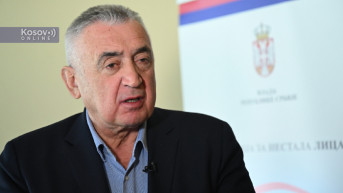
The President of the Commission for Missing Persons, Veljko Odalovic, told RTS that the position of Serbs in Kosovo has been further complicated by the political crisis in Pristina, while particular concern is caused by the announced implementation of laws that could affect the work of Serbian institutions in the fields of healthcare and education.
Speaking about the position of Serbs in Kosovo, Odalovic emphasized the importance of the support that Serbia provides in the areas of healthcare, education, and the preservation of cultural heritage. As he noted, the message that Kosovo is an integral part of the Constitution of Serbia remains the foundation of state policy.
“Resolution 1244 and other international documents remain an important support for protecting our interests,” Odalovic said, adding that Serbia will continue to invest in projects that contribute to the survival of the Serbian people in that area.
Odalovic believes that Serbia is demonstrating readiness to continue dialogue, but that the problem lies in the lack of willingness on the other side.
“We insist on dialogue and are ready to discuss every topic, but a conversation requires two parties,” Odalovic said.
According to his assessment, the European Union, as a mediator, does not have sufficient capacity or political will to ensure the implementation of the agreements that have been reached.
Particular concern is caused by the announced implementation of legislation that could affect the operation of Serbian institutions in the fields of healthcare and education.
The President of the Commission for Missing Persons warns that this could force thousands of employees in those sectors to register their institutions within the Kosovo system.
“Two vital pillars of the survival of the Serbian community are under attack — healthcare and education,” Odalovic stressed.
According to him, such moves would represent a departure from the essence of the agreements reached in Brussels.
Odalovic recalled that the establishment of the Association of Serb-majority Municipalities (ZSO) is one of the key obligations from the 2013 agreement, but that it has still not been implemented even after more than a decade.
“The Brussels Agreement was accepted precisely because the Association of Serb-majority Municipalities was its core,” Odalovic said.
He believes that international mediators have not exerted sufficient pressure on Pristina to fulfill the obligations it undertook.
Additional uncertainty is also caused by political instability in Pristina, where an institutional crisis has emerged following a dispute over the dissolution of parliament.
Odalovic assesses that such a situation further complicates the position of the Serbian community.
“The environment that has been created toward Serbs is very unfavorable, and that makes any dialogue much more difficult,” Odalovic said.
As he noted, there are now fewer and fewer representatives of Serbs in the institutions in Pristina, which further complicates the political situation and the possibility of protecting their interests.



comments