
Pata: EPC Summit in Copenhagen
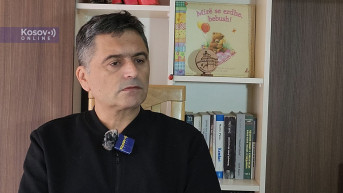
Unlike the European Political Community (EPC) summit held in Tirana, which had a stronger focus on the region, the summit in Copenhagen hardly addressed issues concerning our region at all, Ilir Pata, political analyst and editor at the daily newspaper Tema in Tirana, told Kosovo Online.
He noted that leaders at yesterday’s summit in Denmark were preoccupied with urgent problems of the Baltic and Scandinavian countries regarding the Russian threat—or, as he put it, their concerns over what they call the Russian threat.
“Attention was devoted to the Caucasus region, to those now considered part of the European Union’s new alliance. The Caucasus countries, or those bordering Russia, such as Moldova, Georgia, Azerbaijan, Armenia, have already gained special significance,” Pata emphasized.
He added that Moldova’s elections, as seen last week, became the subject of geopolitical debate.
“Elections in these countries are increasingly no longer about parliamentary alternatives, choosing a prime minister, or politicians to implement projects. Instead, they have become ‘geopolitical trenches’—a matter of being ‘for or against the European Union.’ We saw a month ago that the German chancellor, the French president, the European Commission president, and other European leaders traveled to Chișinău and pledged a kind of closeness, a great affection toward Moldova. Moldova and Albania are two small countries that suffered most in the post-communist transition—poor countries plagued by organized crime, corruption of high officials, and also burdened by a kind of stereotyping in European countries that use Moldovans, or even Romanians, as a negative cliché for political purposes. Today, the ‘love’ for Moldova has suddenly exploded in these countries, which is nothing more than a geopolitical instrument,” Pata assessed.
Speaking about our region, he said that two or three political alliances have emerged, reshaping the configuration into two or three poles—a pole led by Croatia, a pole led by Serbia, and a pole involving Hristijan Mickoski from North Macedonia and Albin Kurti from Kosovo.
“Of course, on the Croatian side, Albania is a natural ally as a NATO member, as is Kosovo. I see this more as a political alliance, almost as if we have returned to the years of flourishing Yugoslavia under Tito, when there was a Croatian pole with its alliances with Slovenia and parts of the Bosniaks, facing the Serbian lobby along with Montenegro, Macedonia of that time, and parts of Kosovo. Aligning with one side or the other has turned into a political agenda for actors across the region. In Croatia, we see Plenkovic attacking Milanovic about ‘who is more patriotic.’ In Montenegro, the debate is framed as being ‘for or against’ the Serbian World. In Serbia, there is the conflict between President Vucic and the ruling party with the opposition, again revolving around accusations of who is more patriotic. In Kosovo, there is the battle between Albin Kurti and the opposition, with accusations over who has ‘sold out more’ to Vucic. The same thing is happening in Albania, as well as in Macedonia. To me, this reflects a lack of political vision in the Western Balkans—a region which, as in the past during the Balkan wars, the First World War, and the Second World War, has always been most affected by the interests of the great powers,” Pata said.
This type of politics, he believes, does no good.
“It is clear that Albania is naturally aligned with the West, and this has been the case since Albania’s creation—even during Austro-Hungarian times, when it preserved part of Albanian territory from being given to neighboring Balkan states. Now we must live in a time beyond that past, which only brought us losses,” Pata concluded.



0 comments