
Pavicevic: The imprisoned Serbs were brutally mistreated

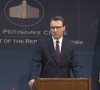
Liaison officer between Belgrade and Pristina, Dejan Pavicevic, who visited the arrested Serbs in Kosovo a few days ago, said that in his 10-year career, he had visited people in prisons many times and that he had seen everything and anything in his life, but that now he had met with an inhume maltreatment of detainees, Novosti reports.
"I've been doing this job for ten years and I've visited people in prisons many times, I've seen various jobs in my life, all kinds of things, but this is an inhumane treatment of people. Literally a bestial treatment. Milun Milenkovic Lune had the worst of it. It's a brutal mistreatment, what they did to him," Pavicevic said.
Apart from Milun Milenkovic, Pavicevic also visited Nemanja Vlaskovic, Milovan Bozovic, Dalibor Spasic, Rados Petrovic, and Dusan Obrenovic, and based on what he saw, he states that the actions of the Kosovo Police towards them can be characterized as a criminal act.
"As for Lune Milenkovic, I see no other way than to qualify that act as attempted murder. It's sheer luck that that man stayed alive. He was hit in the head with a gunstock and kicked. His only luck is that he is an exceptional man - an athlete, that he is in a contact sport, and that he had an encounter with blows through sport. Of course, not such a brutal experience. If he was not an athlete and if he did not play the sport he does, he would not be alive," Pavicevic said.
Pavicevic, who compiled a report on the visit, says that the Serbs who were detained recently still have hematomas and lacerations on their hands from tying them.
"They tied their hands with plastic ties; it's so tight that they complain that they can't feel their thumbs. They have bruises and hematomas on their stomachs. They hit them in the area of the liver, and all of that can leave permanent consequences. Not to mention that they cursed, and insulted them. You know what, you arrest someone and charge him with the crime of racial, national, and religious intolerance and then you curse his Serbian mother. That goes beyond all hypocrisy. In ten years I have not seen anything like this. The level of horror and everything that they experienced is impossible to recount. By the will of God, these people will not have lasting consequences. The question is how they will heal their psychological traumas," Pavicevic says.
The liaison officer reminded that Rados Petrovic and Dusan Obrenovic, whom he had visited in the prison unit in Gnjilan, had been detained regardless of the fact that there was evidence that they had not in any way participated in the riots on May 29 in Zvecan, because KFOR had taken them away 20 minutes before it all had started.
"People who have absolutely nothing to do with anything were taken into custody. KFOR took them away twenty minutes before the riots started. There are also surveillance camera recordings and media recordings for that. Dusan Obrenovic still has visible traces of the beating. He has scars. We are talking about the things that specifically happened in his case three weeks ago," Pavićevic emphasizes.
Speaking about the atrocities committed by the Kosovo Police against the Serbs they imprisoned, he says he is not sure there is a word in the Serbian language to describe it all.
"That is something that an animal would not do, and not a human to another human. You would not tie an animal in such a way to leave such marks as these people have on their wrists," Pavicevic points out.
Also, Pavicevic states that he will send a request for permission to visit the Serbs who were detained after his visit.
"Of course, I would like to visit the Serbs who were arrested after my visit, as well as the six Serbs that I have already visited. We will certainly ask for a permit, now we will see whether we will get it," Pavicevic said.
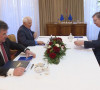
Pavicevic's report, about everything he saw and heard from the Serbs detained by the Kosovo Police, was presented in Brussels by the President of Serbia Aleksandar Vucic, handing it to the head of the European diplomacy, Josep Borrel;, and the EU Envoy for Dialogue, Miroslav Lajcak.
In this way, Vucic once again pointed out the atrocities and torture that the Serbs were going through.
comments