
Pavkovic: Tusk could be a figure to help facilitate the dialogue
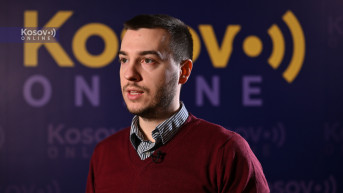
Milos Pavkovic, an associate of the European Policy Center, assesses that Poland, as the presiding country of the EU Council, will not interfere in the process of dialogue between Belgrade and Pristina. However, he believes that Prime Minister Donald Tusk could position himself as a figure capable of assisting in facilitating the dialogue.
"Donald Tusk is an experienced Polish and European politician. He served as President of the European Council for two terms, which is very significant considering that Tusk visited Belgrade last year and is well-acquainted with the situation. He could position himself as a figure capable of facilitating the dialogue, particularly in preparing the new person who will succeed Miroslav Lajcak," Pavkovic stated for Kosovo Online.
Poland has been presiding over the EU Council since January 1, but this analyst does not believe that the fact that it has recognized Kosovo will influence future moves.
"The fact that a country has recognized Kosovo does not necessarily mean bias in the dialogue itself. We see that many countries that have recognized Kosovo have insisted on dialogue and the implementation of agreements, including the creation of the Community of Serb Municipalities. Even Kosovo's biggest sponsors, Germany and France, blocked Kosovo’s membership in the Council of Europe last year precisely because of the lack of dialogue," the analyst said.
He also credits Pristina's actions for this.
"Especially considering the kind of diplomatic fiasco that Kurti's government has had over the past four years, where it managed to damage relations with all its partners, including the United States," Pavkovic emphasized.
He also believes that Poland is unlikely to have more influence in the dialogue process between Belgrade and Pristina.
"Whichever country presided over the EU Council, it never had much influence over the course of the dialogue, as the dialogue is primarily managed by the European External Action Service, specifically the EU's Special Representative for the dialogue. In this context, we should not expect Poland to interfere much either. That said, Poland has highlighted one of the key priorities of its presidency – security in the context of the war in Ukraine and sanctions on Russia. I believe that Serbia's alignment with EU foreign policy could create goodwill from Poland as the presiding country, or perhaps even strain relations with Poland because this is a top priority for Poland as the presiding country and for Kaja Kallas, the new EU High Representative for Foreign Affairs and Security Policy," Pavkovic explained.
Poland's statement, as the presiding country of the EU Council, that the normalization of relations between Belgrade and Pristina represents a key condition for further progress toward EU membership, is seen by Pavkovic primarily as a reiteration of the positions of other European institutions.
"This is one of the conditions for progress, and it is no secret for Serbia. From the beginning of the negotiation process, the pace of negotiations has largely depended on the progress of dialogue with Pristina," Pavkovic said.
He explains that the same conditions would apply to Pristina, which applied for EU membership in December 2022.
"However, since Kosovo is under restrictive EU measures and acts quite unilaterally, creating tensions, their candidacy has not even been discussed, and punitive measures are still in place," the analyst noted.
He reminds that former High Representative for Foreign Affairs and Security Policy Josep Borrell proposed lifting the measures on Kosovo but doubts that will happen as long as Pristina continues its unilateral actions.
"Although there is an initiative, it has not been materialized and will not be materialized until Kosovo begins de-escalation – that is, until the government in Pristina begins de-escalation, which, as we see, is still not the case," Pavkovic concluded.
0 comments