
Peci: It's no surprise there's a terrorist attack in Serbia, the Resolution on Srebrenica has painted a target on Serbs' foreheads
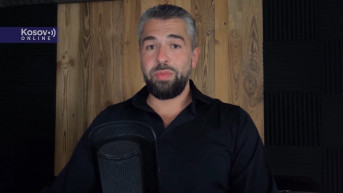
Expert on Radical Islamism from Germany, Irfan Peci, has stated that the terrorist attack in Belgrade is not a surprise, considering the existence of various groups posing a threat, emphasizing that the Resolution on Srebrenica has painted a target on Serbs' foreheads and marked them as a legitimate target.
"I am not surprised; it was only a matter of time before something like this happened in Serbia because there are different individuals who pose a threat. We have radical Muslims in Kosovo, which is a danger for Serbia, where a radical Albanian Muslim might come to Belgrade and do something as a provocation. Particularly in Sandzak, there are as many as you want, and we also have those who convert to Islam and become radicalized," Peci, who was himself radicalized in his early youth but later abandoned that ideology and became an advisor to the German services, said to Kosovo Online.
Peci pointed out that Serbia and Serbs have a "bad image" among Muslims. Their hatred towards Serbs is the greatest in the Balkans, seeing them as war criminals who have always been against Muslims, and this was particularly influenced by the adoption of the Resolution on the Srebrenica Genocide at the United Nations, he added.
"Certainly, the Resolution on Srebrenica has contributed to radical Muslims being more inclined to act against Serbia. They now say – the West, the court, and the entire world have condemned you, recognized what you did, but you still refuse to acknowledge it. In this way, it's as if Serbia has been marked as a target because they killed Muslims in Srebrenica. And this spreads hatred," Peci explained.
Therefore, he emphasizes the importance of discussing the events of the war in Bosnia objectively, covering everything that happened, not just what the Serbs did, but also what others did to the Serbs.
"But when the focus is only on that, it can have an effect and influence on such terrorists, leading them to say – look what they did to us in Srebrenica, why should I care about a Serb guarding the Israeli embassy? This is very dangerous," Peci warned.
Peci mentioned that yesterday's terrorist attack was not a surprise to him, as Wahhabis have long been "missionizing" in Serbia, including through the internet.
He explains that someone might hear something about Islam, look it up on YouTube or TikTok, and when they search in the Serbian language, they won’t find a liberal imam but rather a radical Wahhabi preacher.
"He says that everything they hear is a lie, and that Islam is this... That is the problem because radical Muslims dominate the internet. If you search for information, you end up finding them. In Serbia, radical Muslims missionize, and a conversation can start on the street with an invitation to a mosque, which then piques their interest and leads them into it. Initially, you think it's about faith, but behind it is radical Islam, a dangerous political ideology," Peci added.
He says it is also not surprising that a police officer was attacked in front of the Israeli embassy because, from the perspective of radical Islamists, due to the crimes in Gaza, the Israeli embassy is a target, as is the police officer protecting that building.
Novi Pazar: The New Center of Radical Islam in the Balkans, Instead of Bosnia and Herzegovina
Peci also pointed out that Novi Pazar is now the new center of radical Islam in the Balkans, instead of Bosnia and Herzegovina.
"I would say that the center of radical Islam in the entire Balkans is in Novi Pazar, not in Bosnia and Herzegovina. Gornja Maoca is well known, but that was some time ago. The Wahhabis in Novi Pazar are the most dangerous, and it doesn't surprise me that he moved there to live. In Novi Pazar, there is an Islamic atmosphere, as if you are not in Serbia... Most of the population are peaceful people, and that is well known, but the problem is the many radical Muslims in Tutin and Sjenica, and especially in Novi Pazar," said Peci, who is originally from Sandzak.
He says this is dangerous for Serbia, which, again for political reasons, to avoid being accused of discriminating against Muslims due to their faith, can no longer react effectively, and the consequence is a proliferation of radical Islam.
Behind Every Individual Act, There is Always a Group
He also points out that behind every individual who commits a terrorist act, there is always a group of people.
"There is always a network behind it; there is always someone who provides financial and moral support, someone who encourages another to carry out the act, promising to look after their wife and children... There is always a network behind it, but it is difficult for the state to prove. The perpetrator is one, but finding evidence against the others is necessary. However, I don't know of any attack where an individual did everything alone... Surely, there is also a community, a group of people who supported him," Peci explains.
He also notes that the war in Gaza has brought a new wave of radicalization to Europe.
"Serbia supports Israel, and that is enough for radical Muslims to say – look what they are doing to our brothers, and Serbia supports it. This means that Serbia should also be attacked," Peci said.
He added that the internet is full of Islamic propaganda that spreads hatred.
"Most Muslims are peaceful and do nothing, but they have great sympathy for such people and support attacks if they are against Israel. What is said in mosques against Jews or other non-Muslims is the beginning of the problem, not when one person carries out an attack..." Peci observed.
He also recalls the anti-Israeli protests in Europe, which had as many as 20,000 or 30,000 participants, most of whom were Muslims.
"There were also planned terrorist attacks on synagogues and embassies, but Western services prevented them. And in the West, similar to Serbia, from the perspective of Islam - anyone who supports my enemy is my enemy, especially if they are infidels, non-Muslims," Peci added.



comments