
Pekevski: Resolution on Srebrenica pressure for Serbia to change its relationship with Russia
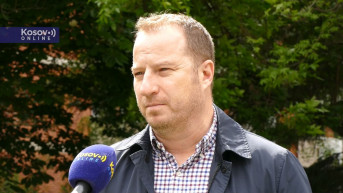
Macedonian analyst Sinisa Pekevski says that the initiative to pass the Srebrenica Resolution in the UN General Assembly is a way to pressure Serbia and Republika Srpska to change their foreign policy towards Russia and that the cosponsorship of this document by Western Balkan countries is just one of the ways to implement such pressure.
Pekevski tells Kosovo Online that the cosponsorship of the Resolution by regional countries should not be seen as a "point of convergence" against Serbia but rather as a "tool" to persuade this country to impose sanctions on Russia.
"Such rhetoric can be seen, but I believe that countries don't have a negative but rather a contrary stance towards Serbia due to its refusal to impose sanctions on Russia. Probably with the help of the EU and other partners indirectly involved in the Ukraine-Russia conflict, they are confirming their position in this way to pressure Serbia and compel it to change its stance. This is one of the ways in which such pressure can be exerted," Pekevski believes.
He says that Srebrenica is a case from the past now being used as a way to pressure not only Serbia but also Republika Srpska.
"At this moment, the pieces have fallen into place on how to exert pressure not only on Serbia but also on Republika Srpska and President Milorad Dodik, who has a completely contrary or different relationship with both the European Union and the United States. This is one of the ways they want to steer him back on track," Pekevski said.
He believes that due to the US elections, this will be a crucial year for international relations and, consequently, for the Western Balkans region as well.
"We have seen the re-election of the old president in Russia, there will be presidential elections in America, where if expectations are met and Donald Trump wins, I believe the rhetoric will change and decrease, as well as easing the conflict they have with China. This also means that the focus will no longer be on the Balkans but on some kind of reconciliation, not the polarization of the world into two blocs," Pekevski emphasized.
Regarding how conflicting views on the Srebrenica Resolution will affect economic and bilateral cooperation between Serbia and regional countries, Pekevski doubts that there will be any impact.
"No, business has not stopped so far. I don't believe there will be a halt in business because companies are interested in profit and business aspects. I don't foresee any drastic changes. We see that Serbia will host EXPO in 2027, and the majority of investments, over four and a half billion last year, were direct foreign investments. Therefore, I don't see this trend decreasing; rather, it will increase due to the large number of infrastructure projects happening in Serbia. On the other hand, there is strong leadership under the President of Serbia and his not only Balkan but also international influence," Pekevski concluded.



0 comments