
Prenkaj: A joint declaration on regional integration could be a “shortcut” to the EU
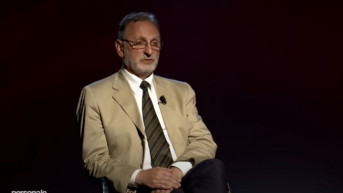
Diplomat Albert Prenkaj believes that a scenario of conditional integration of Western Balkan candidates, with guaranteed European Union membership, would represent a logical geopolitical and strategic move by Brussels in the new international circumstances, adding that a joint declaration on regional integration before 2030 could represent a new “shortcut” to the EU.
Prenkaj told Kosovo Online that such a model would imply the integration of the “Western Balkans six” with the fulfillment of criteria under the supervision of EU member states, that is, “tutoring countries” for each state in the region individually.
“A joint declaration on the integration of Western Balkan states before 2030 is of essential importance, as a new shortcut on the path to the EU. I believe that a political decision on the integration of the Western Balkan six with criteria that would have to be met for integration is a logical geopolitical and strategic realpolitik move by official Brussels. The scenario would foresee conditional integration (with guaranteed membership) with criteria supervised by EU countries for each Western Balkan country. In this case, the EU would expand and gain a new political and strategic contour, preventing interference from inverse geopolitical interests on European soil,” Prenkaj explained.
He assessed that global events, including the war in Ukraine, conflicts in the Middle East, and changes in the foreign policy strategy of the United States, indicate that the world is undergoing a period of transformation of the international order.
Prenkaj stressed that in this context, the issue of European integration of the Western Balkans must be viewed from a geopolitical perspective, and not solely through the criteria for EU accession, recalling that Chapter 35 in Serbia’s negotiations with the EU is directly linked to the Belgrade–Pristina dialogue and the implementation of the 2023 Ohrid Agreement.
“Both sides are required to develop good-neighborly relations, mutual recognition of certain national symbols, and to resolve obstacles to membership in international organizations,” Prenkaj said, noting that Serbia, out of 35 chapters, has opened 22, two of which have been provisionally closed, while Kosovo submitted its application for membership in December 2022, but that the EU Council has not considered it to date.
Prenkaj also assessed that Albania and Montenegro are currently leading the integration process, while North Macedonia remains blocked by bilateral disputes and internal political issues.
Regarding the joint op-ed by Edi Rama and Aleksandar Vucic, in which a phased model of integrating the Western Balkans into the EU single market and the Schengen area before full membership is proposed, he noted that the integration of the Western Balkans represents a geopolitical and strategic security imperative for both the EU and the region.
“Despite the Growth Plan for the Western Balkans, which foresees accelerating the socio-economic convergence of the region with the EU by 2030, as a non-fixed date, I believe that the integration of other European countries, including the Western Balkans, is a geopolitical and strategic security imperative of the EU, as well as of countries in the southeastern corner of Europe. Although it may sound unrealistic, insurmountable, and even like a kind of science fiction, integration with common criteria for the Western Balkan six is an optimal geopolitical solution for Europe and the EU,” Prenkaj said.



0 comments