
Radakovic: Citizens in the north passed the test of democracy, significant political pluralism
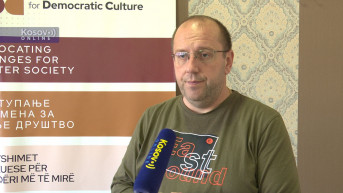
The Executive Director of the Center for Advocacy of Democratic Culture, Dusan Radakovic, stated that the high voter turnout in the four northern municipalities of Kosovo showed that voters understood the importance of the Serbian community’s participation in local elections, as well as the significance of political pluralism for the electoral process.
Speaking to Kosovo Online, Radakovic emphasized that citizens demonstrated seriousness and responsibility, bearing in mind the consequences of the 2023 elections, when mayors were elected with only a few percent of voter support.
“We know what the consequences were when mayors were elected with three percent, with 100 votes, and what decisions were made, how much our lives have changed over the past two–two and a half years. It was expected that people would take these elections very seriously, and I am glad that, unlike the usual local election trend, voter turnout this time exceeded that of the parliamentary elections. More people went out to vote compared to the previous elections. Naturally, there was also political pluralism — more parties, more local initiatives. Some did better, others worse, but overall, I think it’s positive to have different options, and I believe the citizens of the four northern municipalities passed the test of understanding the importance of these local elections,” Radakovic said.
He added that the dominance of the Serb List in majority-Serb municipalities was not surprising.
“As expected, the Serb List won in nine out of ten municipalities. We have Klokot, where elections will be repeated, but that reflects the real, factual situation. Perhaps the group ‘Sever za sve’ (‘North for All’) surprised somewhat with the number of votes and two seats in the local assembly in North Mitrovica and nearly a thousand votes for the mayor, but overall, citizens believe that because of finances, connections with Belgrade, and salaries, the Serb List should lead the entire process,” Radakovic explained.
From an observer’s perspective, he noted there were fewer irregularities than in the parliamentary elections but pointed out three that most affected the electoral process, calling the presence of Interior Ministry officials in polling committees a flagrant violation of the law.
“Among the more serious irregularities were delays in opening some polling stations in Leposavic, complaints from certain electoral subjects about brochures present at polling stations, and two arrests that day involving party materials. However, two major and more interesting violations occurred two days before the election, when the Central Election Commission asked the Ministry of Interior to help fill polling committees in four northern municipalities because Albanian parties were not interested in going to certain villages in Leposavic and Zubin Potok. So we ended up with Ministry of Interior employees — 13 of them in Leposavic — serving as members of municipal election commissions, polling stations, and electoral boards. This is a flagrant and catastrophic breach of the law, which clearly states that people from the police or army cannot participate in the election process. Even people in uniform are not allowed to enter polling centers, let alone run elections,” Radakovic stressed.
Speaking about irregularities on election day, Radakovic recalled cases where polling locations were changed for voters from North Mitrovica.
“We had people from the northern part of Mitrovica whose polling places were changed to entirely different towns — Klina, Istok, Vucitrn, Gojbulja, South Mitrovica. This wasn’t just moving them within the same municipality, but completely relocating them. I spoke with many of them; we had almost a hundred such cases reported that day. How can someone born and living in North Mitrovica go vote in Klina, where there isn’t a single Serbian representative, or in South Mitrovica, or Istok, or Pristina? It’s a major problem. I don’t know why this was done — perhaps due to decisions in Marigona or the registration of Albanians in Preoce, where around 2,000 to 2,500 Albanians were added — but it’s truly a disastrous fact,” he emphasized.
He also pointed to a pre-election issue concerning accreditation for media outlets reporting in Serbian, including the failure to certify Kosovo Online.
“Frankly, in 2025, it’s unbelievable that we’re talking about non-accreditation — or selective accreditation — of all media working in Serbian, or Balkan-based media that legally operate in Kosovo. In the end, the decision to deny accreditation only to your outlet is a disgrace and a shame, first and foremost for democracy, and a disgrace for everyone living in Kosovo and for the CEC. Kosovo Online operates legally, properly registered, without a single complaint about its work. On the other hand, for certain political reasons, denying accreditation to a media outlet is a catastrophic and flagrant violation of the law, of human rights, and of all other principles. I think that in the time we live in, some things must change, because banning media in 2025 is disastrous for humanity and for the society we live in,” Radakovic said.
Regarding the post-election period, Radakovic expressed hope that trust and respect toward local institutions would be restored among members of the Serbian community.
“Above all, I expect greater respect from citizens toward the municipalities, because now we know that previous mayors were elected with two to three percent of the vote — for example, in Leposavic with 107 votes, in Zubin Potok with 153. I expect greater respect toward municipalities and more engagement of municipal officials through public debates and consultations with citizens to find solutions. About 85 percent of the population here are Serbs, yet there was not a single public debate about priorities. A bridge was built without any public discussion, without an urban plan, and so on. So, above all, I expect more trust, more engagement, and certainly some decisions made by previous mayors will have to be reexamined, as they are surely contrary to the law and to the positions of 85 percent of the community living in the North. Certain actions by the police and local self-government were against the law, created complete distrust, and led to worse relations both among Serbs and between Serbs and Albanians in the region,” Radakovic concluded.



0 comments