
Radic: Dumosh military base is Kurti’s strong political-propaganda message
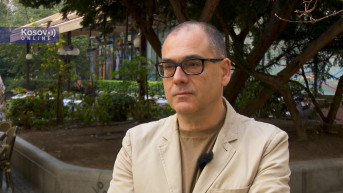
Military analyst Aleksandar Radic assessed that granting the Dumosh airfield near Podujevo for use by the Kosovo Security Forces (KSF) sends a strong political-propaganda message from Prime Minister Albin Kurti. However, despite increasing armament efforts, Kosovo will not acquire combat aircraft.
“The infrastructure of the Kosovo Security Forces is expanding, carrying a very strong political-propaganda message — that they can deploy their forces to areas oriented towards central Serbia. This is part of a political construct that is very transparent. The aim is to demonstrate strength and convince a segment of public opinion, crucial for Prime Minister Kurti’s election prospects, that much is being done to protect Kosovo from Serbia,” Radic stated to Kosovo Online.
He added that this message is directed at a population segment that needs to be assured Kosovo is being protected.
“Protected from whom? From Serbia? And what exactly is Serbia supposed to do? It doesn’t matter; what matters is that these bases are near Serbia. In this context, the expansion of locations where KSF members are stationed should be viewed. Naturally, when you look at the map, the plan is for these locations to be as close as possible to the administrative line, as close as possible to central Serbia,” Radic said.
Radic explained that the Dumosh base was previously the Batllava sports airfield, which was taken over by EULEX after 1999. It is no surprise that it has now been handed over to the KSF.
“The Batllava location previously belonged to EULEX, and many facilities used for various purposes by international organizations have since been handed over to Kosovo’s state institutions. These are countries that recognized Kosovo and do not see any legal problem in this,” Radic explained.
He also noted that the increasing number of KSF garrisons has a rational justification presented in meetings with KFOR representatives.
“The fact is that the barracks currently used by the KSF are mostly located in central city areas, a legacy of old times, dating back to the Kingdom era when barracks were located on the outskirts of cities. Over time, cities have expanded and absorbed these areas. There is now a need to move them outside urban centers and use the land for commercial purposes. The KSF has a growth plan, and forming new units provides an additional reason to establish new camps and barracks,” Radic said.
Radic highlighted that the exact function of the Dumosh base remains unclear, and many claims are part of election campaigns.
"For now, we don’t know the details of what the KSF intends to do, as the statements made so far are in the context of the ongoing campaign for elections in February next year. There have been mentions of air defense systems, but currently, such equipment is not part of the KSF’s arsenal,” Radic said.
He dismissed claims that this marks the beginning of building KSF infrastructure for acquiring combat aviation as unrealistic.
"The Kosovo Security Forces will not get combat aircraft. There is no way to implement that. KFOR still adheres to old regulations that define these forces and has not entered a zone of provocation regarding heavy weaponry", Radic stated.
Radic emphasized Turkey as the key country pushing to develop the KSF into a conventional armed force, supplying it with increasingly sophisticated combat equipment.
"Self-propelled 120mm mortars have been acquired. This is a serious challenge and provocation, and Turkey is behind it. Turkey has a vested interest in maintaining a strong military presence in Kosovo and Metohija. All more complex equipment, everything with greater firepower, comes from Turkey. The KSF’s strength, in terms of firepower and both offensive and defensive potential, depends on Ankara’s decisions. These resources come from them", Radic explained.
Meanwhile, Western support for the KSF focuses on lighter military equipment and weapons with limited range.
"They received M1117 light armored vehicles from the Americans. But let’s be clear, this is a military-police vehicle with clear limitations. On the other hand, Turkey aims to enable the KSF to evolve into a conventional armed force. Their efforts are directed at building an effective, relatively strong light infantry brigade, followed by armored missile systems with a range of up to four kilometers and 120mm mortars. We now await the next round of equipment. It won’t be surprising if light portable air defense missile systems are included on that list,” Radic concluded.



0 comments