
EU and gradual integration: Is there enough support for a new enlargement model?
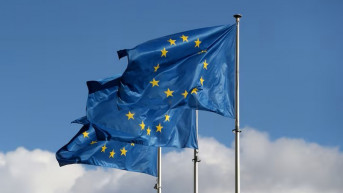
Support among EU Member States for the Franco-German plan for the gradual integration of the Western Balkan countries, Ukraine and Moldova is growing, while interlocutors speaking to Kosovo Online assess that security challenges and greater unity within the Union have encouraged discussions on a new enlargement model. At the same time, they caution that the question remains whether such a concept will receive sufficient support within the EU and how it could be implemented in practice.
Written by: Jelena Novakov
At the end of May, German Chancellor Friedrich Merz proposed granting Ukraine the status of an associate member of the EU, while Moldova and the Western Balkan countries would be given observer status within EU institutions.
At the same time, Austria, the Czech Republic, Italy, Slovakia and Slovenia called on the European Commission to reconsider the way in which it integrates potential Western Balkan members into the Union’s single market, presenting this as a means of keeping candidate countries outside Russia’s sphere of influence.
In response, Germany and France proposed granting EU candidate countries earlier access to European programmes and the single market, even before full membership. The proposal also envisages the possibility for representatives of candidate countries to participate in certain ministerial meetings and EU summits, albeit without voting rights.
Ukraine and Moldova took a step forward on their European path during what has been dubbed a “mega Monday”, opening the first cluster in their EU accession negotiations, while Montenegro closed two negotiation chapters. Earlier this week, Roberta Metsola visited Montenegro, while António Costa recently toured the region, discussing EU enlargement with regional leaders and participating in the EU–Western Balkans Summit in Tivat.
The idea of admitting the Western Balkan countries to the single market and the Schengen area before their accession to the European Union was put forward by Albanian Prime Minister Edi Rama and Serbian President Aleksandar Vucic in a joint article published in the German daily FAZ in February.
A Favourable Moment for Enlargement
Mijat Kostic of the organization Novi treći put told Kosovo Online that the current geopolitical situation has created a favourable moment for the enlargement of the European Union, which, in his assessment, is currently demonstrating greater unity than in previous years when it comes to preventing the spread of Russian influence.
“On the one hand, there are security-related reasons, primarily stemming from the war in Ukraine, to provide that country with a certain form of security guarantees and to geopolitically consolidate that space. This also implies integrating Moldova, which could become the next target of Russian hybrid activities and potentially even direct pressure, into the European Union’s Common Foreign and Security Policy,” he said.
Kostic noted that, on the other hand, the reasons behind discussions on a different model of accession to the European Union are primarily economic in nature.
“Countries such as Ukraine and Moldova, which are largely economically depleted, face high levels of corruption and have insufficiently developed rule-of-law systems, cannot be easily integrated into the Union. This is why the possibility is being considered that new members would obtain full rights only after a certain period, including the right to veto and participate in decision-making on specific issues. These are two distinct approaches – one driven by economic considerations and the other by geopolitical factors,” he said.
Kostic believes that candidate countries could receive a certain form of support already during the accession process, while the opening and closing of negotiation chapters for individual countries could be accelerated. He added that there is also the possibility of applying a tailored accession model to each country in order to address specific challenges more effectively on the path to EU membership.
“Perhaps the most radical proposal is that states, even after joining the Union, would only be able to exercise veto rights after a certain number of years, that is, after resolving key domestic issues,” Kostic stated.
He explained that such an approach would preserve the possibility of unanimous decision-making while preventing potential blockages by member states, similar to those which, according to him, had previously come from Hungary while Viktor Orbán was in power.
Kostic said he expects certain EU member states to advocate new enlargement models, noting that the objective of Berlin and Paris is to prevent the expansion of the Russian sphere of influence, particularly in Ukraine and Moldova.
“Even Hungary, which previously blocked certain packages of sanctions against Russia and additional assistance to Ukraine, changed its position following the change of government in Budapest. We can see that the European Union is more united today than it was a year ago, and this represents a positive development when it comes to enlargement policy. In such circumstances, new member states would likely demonstrate a similar degree of caution toward Russia as Germany and France. During this process of consolidation, it is quite possible that all member states, or at least the majority of them, will adopt a common position that Ukraine and Moldova should become part of the European security space and, consequently, the European economic area. I believe the current momentum for enlargement is ideal, as Europe presently enjoys both internal unity and a strong incentive to complete the security and economic consolidation of its space,” Kostic concluded.
The Question of Support
Milan Igrutinovic, a research associate at the Institute of European Studies in Belgrade, told Kosovo Online that the Franco-German proposal for a new EU enlargement model represents an attempt to redefine the accession process and provide more tangible incentives to candidate countries. However, he cautioned that there is still no clear legal framework or guarantees that such an initiative will receive sufficient support among EU member states.
“Any proposal jointly supported by France and Germany inevitably attracts attention because it carries a certain political weight. The idea is based on the assessment that the Western Balkan countries, as well as Ukraine and Moldova, are unlikely to conclude negotiations and resolve outstanding issues in the short term. Therefore, the enlargement process is being redefined as a longer-term undertaking. The goal is to offer these countries a certain degree of progress while simultaneously securing support for such an approach within the European Union itself,” he said.
Igrutinovic assessed that governments supporting the new accession model could be expected to take certain steps in that direction, but stressed that enlargement is still not among the EU’s priority issues, unlike support for Ukraine.
“Although enlargement policy has gained somewhat greater importance in recent years, the Western Balkans have not received special attention. The Growth Plan and the allocation of certain financial resources certainly represent a positive step forward, but politically, and in terms of how enlargement is perceived, very little has changed. In Europe, enlargement—particularly regarding the Western Balkans—is still not viewed as one of the responses to the current challenges facing the European Union,” he said.
He pointed to differing positions among member states, some of which will continue to insist that candidate countries meet criteria relating, among other things, to the functioning of the judiciary, the fight against high-level corruption, the protection of media freedoms, and the rights of citizens.
“Criticism of Serbia regarding its relationship with Russia and its refusal to impose sanctions will remain present,” he said, adding that certain EU member states will also continue to highlight the lack of progress in the normalization process with Kosovo as a problem, regardless of the policies pursued by Kosovo’s caretaker Prime Minister, Albin Kurti.
According to him, a large number of administrative and legal issues remain unresolved, making it necessary to wait and see whether a mechanism capable of implementing such a plan can be established.
“This remains highly uncertain. I would wait a few months to see whether the plan can find an appropriate administrative mechanism within the European Union and whether it enjoys the backing of a sufficient number of member states willing to support what is, to a large extent, a novel administrative and legal approach. We simply do not have a clear picture of how the European Union would implement such a model within its existing procedures, because a large number of questions remain unanswered,” Igrutinovic concluded.



0 comments