
Igrutinovic: No guarantees that the new enlargement model will receive sufficient support within the EU
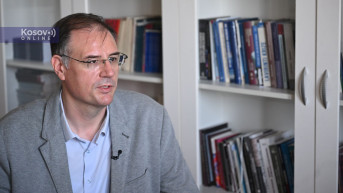
Milan Igrutinovic, a research associate at the Institute of European Studies in Belgrade, told Kosovo Online that the Franco-German proposal for a new European Union enlargement model represents an attempt to redefine the accession process and provide more tangible incentives to candidate countries. However, he warned that there is still no clear legal framework or guarantee that such an initiative will receive sufficient support among EU member states.
"Any proposal jointly backed by France and Germany inevitably attracts attention because it carries a certain political weight. The idea is that, based on the assessment that the Western Balkan countries, as well as Ukraine and Moldova, are not ready to conclude negotiations and resolve outstanding issues in the short term, the enlargement process should be redefined over the longer term. The goal is to offer these countries a certain degree of progress and to secure support for such an approach within the European Union itself," he said.
Igrutinovic recalled that the issue of enlargement returned to the forefront following Russia's attack on Ukraine in 2022, and that the prospect of Ukrainian membership further intensified the debate within the European Union.
"The European Union declaratively supports enlargement, but for various reasons it is very difficult to implement in practice. In Brussels, they will say that the responsibility lies with candidate countries that fail to meet the requirements, while candidate countries will argue that there is not enough political will within the EU and that the Union is not using all the leverage at its disposal. In such a stalemate, the Franco-German proposal emerges as an attempt to redefine the process," Igrutinovic said.
As he noted, the Lisbon Treaty does not provide for the possibility of "partial membership," which leaves open the question of how a legal framework for such a model of accession could be established and accepted by all EU member states.
He also pointed out that such plans could depend on political developments within the member states themselves, recalling that presidential elections are scheduled in France next year and that right-wing politician Jordan Bardella, who has criticized the current enlargement model, is among the favorites.
"If he wins, the entire idea could be called into question. At the moment, there is no structured debate on this issue within the European Union," Igrutinovic said, adding that there are no firm guarantees for proposals of this kind.
Nevertheless, he assessed that governments of countries supporting the new accession model are likely to take certain steps in that direction, while emphasizing that enlargement still is not among the European Union's top priorities, unlike support for Ukraine.
"Although enlargement policy has gained somewhat greater importance in recent years, the Western Balkans have not received special attention. The Growth Plan and certain financial resources certainly represent a positive step forward, but politically, and in the way enlargement is interpreted, not much has changed. In Europe, enlargement, particularly in relation to the Western Balkans, is still not viewed as one of the answers to the current challenges facing the European Union," he said.
He pointed to differences in positions among member states, some of which will continue insisting on meeting criteria related, among other things, to the functioning of the judiciary, the fight against high-level corruption, the protection of media freedoms, and citizens' rights.
"Criticism of Serbia regarding its relationship with Russia and its refusal to impose sanctions will remain present," Igrutinovic said, noting that some EU member states will also continue to highlight the stagnation in the normalization process with Kosovo as a problem, regardless of the policies of Kosovo's caretaker Prime Minister Albin Kurti.
According to him, there are still many unresolved administrative and legal issues, which is why it is necessary to wait and see whether a mechanism capable of implementing such a plan can be established.
"This remains highly uncertain. I would wait a few months to see whether this plan can find an appropriate administrative mechanism within the European Union and whether there is sufficient support from member states willing to back an administrative and legal approach that is largely new. We genuinely do not have a clear picture of how the European Union would implement such a model within its existing procedures, because a large number of questions remain open," Igrutinovic concluded.



0 comments