
Radojkovic: NATO bombing of Yugoslavia opened the lamp from which the genie escaped
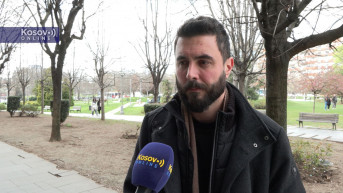
The NATO bombing of Yugoslavia, carried out without the consent of the United Nations Security Council, marked a departure from the previous practice of the international community and a change in international relations, simultaneously opening the lamp from which the genie escaped, historian Stefan Radojkovic says on the occasion of the 25th anniversary of the start of the attack on the Federal Republic of Yugoslavia.
Radojkovic points out to Kosovo Online that in Kosovo, a quarter of a century later, there is only "facade democracy" that has not fulfilled any of the planned goals prior to the NATO intervention.
"The bombing was an introduction to a unipolar world of international relations dominated by the United States with its allies and partners. Specifically, the NATO bombing under the 'code name Joint Forces' marked a departure from the previous practice of the international community - that such interventions require approval from the United Nations Security Council," Radojkovic emphasized.
He reminds that NATO member states attempted to utilize parts of the UN Charter that ostensibly granted them rights to intervene, considering that, from their perception, human rights were being violated in the conflict between the legitimate authorities of the then-FRY and the terrorist organization KLA.
"This marked a change in international relations, and on the other hand, it opened the lamp from which the genie of international interventions escaped in regions that they considered undemocratic, where they believed human rights were being violated," Radojkovic notes.
He adds that for this reason, some theorists in the field of international relations often took Kosovo as the starting point for what would later become interventions in Afghanistan and Iraq, under the slogan of fighting terrorism.
"The intention was the same: to prevent mass violations of human rights, but on the other hand, to conduct social engineering in those societies, to create socially liberal societies modeled after Western European and American societies, as they called themselves," Radojkovic says.
He emphasizes that this was one of the sequences that foreshadowed what was to come from that moment and what was the dominant paradigm until 2016.
"It is considered that throughout 1998, plans were being made in case of intervention - how the intervention would proceed. Primarily, it was an air campaign, bombing from the air with simultaneous and coordinated actions of terrorist organizations both in Kosovo and Metohija and from the territory of Albania, which were attempting to enter the territory of Kosovo and Metohija through the Prokletije mountains. We absolutely do not have all the insights into the moment of the beginning of the planning, but we know that within the State Department and the Pentagon, there were plans on how the intervention should look, as well as how the post-conflict societies should be built after the intervention," Radojkovic said, adding that this was also published in the book "Quest for Sustainable Peace" written by people who were on the ground as a part of the UNMIK mission.
He explains that another group of authors, who were a part of UNMIK, believe that the mission failed and that what was proclaimed as the goal - a multi-ethnic and multicultural society built on the principles of liberal democracy and civic nationalism - did not happen.
"Kosovo is actually a facade democracy; nothing substantial has been done. And this facade of liberal democracy is the only thing that exists. The standards that were set have not been achieved," Radojkovic said.
In support of this, he says, is the fact that after the March Pogrom, more than two-thirds of the standards demanded from the temporary institutions in Kosovo were removed from the list of demands.
Radojkovic is clear - the UNMIK mission has failed, and the EULEX mission even less so.
"In Pristina, we have a mimicry of liberal-democratic institutions that, in such international constellations, are good enough to stick and to say that some standards have been met," he assesses.
On the other hand, he points out that Belgrade and Serbia are in an unenviable situation, especially with the escalation of relations in the Middle East and in Ukraine.
"Belgrade is trying to uphold the principles of respect for international law, UN Security Council Resolution 1244, that it applies to everyone or to no one. A concrete example is Ukraine, a case in which respect for its sovereignty and territorial integrity before 2014 is invoked. If that is the principle, which is in line with all international acts, then it must apply to all actors," Radojkovic said.
0 comments