
Radojkovic: Pristina could use the Resolution to disrupt the dialogue in Brussels
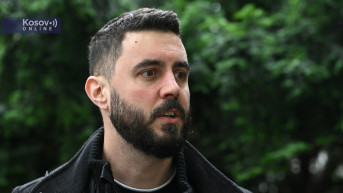
Historian Stefan Radojkovic does not expect extreme consequences or an intensified negative dynamic in regional relations after the adoption of the Srebrenica Resolution, but he adds that it is possible that Pristina will use this Resolution to worsen relations and disrupt the Brussels Dialogue.
"Relations between Serbia and North Macedonia and Montenegro, which voted for the resolution proposal, will remain the same. There will be some disappointment because we actually have good bilateral relations with them, where it will probably be reminded that these bilateral relations could be rewarded," emphasized Radojkovic.
However, when it comes to Bosnia and Herzegovina, the situation is more complicated, our interlocutor believes.
"When it comes to Bosnia and Herzegovina, this Resolution will be used to tighten relations between Belgrade and Sarajevo, and Sarajevo and Banja Luka. However, over the past decade, we have witnessed that relations on these axes are sensitive and that this Resolution will further be used to keep these relations tense, to worsen and further strain them whenever the issue of the crime in Srebrenica is raised. They will never be ideal or exceptionally good as it actually is with Skopje or Podgorica. Good relations with Croatia will remain untouched, we can only expect that possibly even Pristina will use this resolution proposal, primarily the government of Albin Kurti, to worsen relations and disrupt the Brussels dialogue. So, more or less, nothing new in the West," believes the historian.
Regarding the announcement of the Resolution on Jasenovac by Montenegro, he does not expect a deterioration of relations with Croatia, if this initiative is even realized.
"I have nothing against Montenegro advocating for the adoption of the Resolution on Jasenovac, but then it should be a bit differently formulated - About the genocide of Serbs in the NDH. However, until I see a concrete initiative and a concrete proposal, it is premature to say. It is possible that this is a result of internal and domestic politics of Montenegro, as well as the amendments that Podgorica has made to satisfy coalition partners in the current government of Montenegro. It is more a kind of compensation to those parties representing the Serbian electorate in Montenegro," states Radojkovic.
As he says, the voting result in the UN was expected, but he was surprised that the Resolution was adopted only on the third attempt.
"There were attempts at the end of April, then at the beginning of May, obviously there was not enough support among the United Nations members, so more time had to pass until pressure was exerted and lobbied. They managed to push it through and the Resolution was adopted, which was expected. But, the result is such that it shows that the world is divided on the issue of Srebrenica in the sense that one part of the UN, below 50 percent, supports the mainstream narrative about Srebrenica, the other part, slightly more than 50 percent, is either not interested so they do not want to deal with it or is against that issue. Particularly interesting to me was that Israel did not participate in the voting at all. The official stance of Israel and its institutions is that the Crime in Srebrenica was committed and that it is not disputed and proven, but its legal classification is not appropriate for that type of crime," he emphasizes.
He also points out that it is good to notice that some Latin American countries were abstinent, such as Brazil and Mexico, while Russia and China voted against as expected.
"It should be emphasized that, as far as the EU is concerned, Hungary was against, Slovakia, Cyprus, and Greece were abstinent, so these are the current reaches of UN members, like Serbia. We obviously have a certain weight in diplomatic and international relations, but we are a small country in terms of population and economic power, so these are our current reaches, which, in my opinion, are quite fitting and strong for a country of this size and strength," concluded Radojkovic.
Ističe i da je dobro primetiti da su neke latinoameričke zemlje bile uzdržane, kao što su Brazil i Meksiko, dok su Rusija i Kina očekivano glasale protiv.
"Treba istaći da, što se tiče EU, Mađarska je bila protiv, Slovačka, Kipar i Grčka su bile uzdržane, tako da su ovo trenutni dometi članica UN, poput Srbije. Mi imamo očigledno određenu težinu u diplomatskim i međunarodnim odnosima, ali smo mala zemlja gledano po broju stanovnika i ekonomskoj moći, pa su ovo trenutni naši dometi, koji su po meni prilično pristoji i jaki za zemlju ove veličine i snage", zaključio je Radojković.




comments