
Radosavljevic: The fact that we had to go to Brussels means that the government in Pristina does not accept the Serbs as a political factor
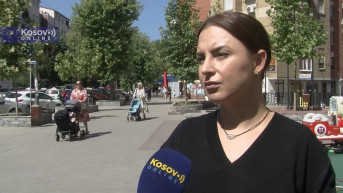
Director of the non-governmental organization New Social Initiative Jovana Radosavljevic, who met with Miroslav Lajcak in Brussels as part of a group of Serbs and representatives of the National Convention of Serbia on the EU, stated that the criticisms from Kosovo's Deputy Prime Minister Besnik Bislimi represented established pressure on civil society and the media.
Earlier today, Bislimi criticized Lajcak for not specifying in his statement about the meeting that it pertained to the National Convention of Serbia, asking him to clarify whether Serbian non-governmental organizations from Kosovo were a part of the National Convention on the EU of Serbia, and adding that these were non-governmental organizations "actively and openly advocating against the integration of the Serbs into Kosovo life".
"It is obvious that our understandings of the term 'integration' differ," Radosavljevic told Kossev.
"We understand it in the context of sustainable integration of people through dialogue, respect for agreements, as well as through existing mechanisms for the protection of the Serbian community, while representatives of this government primarily understand it as the integration of territory, not people—neglecting not only the mechanisms of self-governance of Kosovo Serbs resulting from the dialogue concerning the CSM, police, and judiciary but even neglecting protection mechanisms ingrained through the Constitution of Kosovo, which guarantees multi-ethnic institutions through a system of equal representation of all communities at all levels," Radosavljevic said.
She added that the government's vision of integration was implemented "as an open act of establishing the dominance of the majority community, undermining all previous efforts in building a multi-ethnic and civil society in Kosovo based on mutual respect and appreciation."
"For more than two years, we have been saying that we are ready to talk to the government, but only on the condition that it be a public event in front of the media, because we witness that this government only wants closed meetings so that they can politically exploit them in front of the international public, and create the illusion of communication and cooperation with the Serbian community," Radosavljevic added.
For her, this is a perfect indicator of how the Government of Kosovo sees the way Kosovo Serbs should engage in political life.
"The fact that the Serbs from Kosovo have to travel to Brussels to point out the consequences of unilateral and uninformed policies of the Kosovo Government, the alarming consequences of the decision of the Central Bank, the ban on the import of goods from Serbia, illegal expropriation, and the constant presence of Special Units of the Kosovo Police in northern Kosovo, the appropriation of property of the Serbian Orthodox Church, the disrespect of decisions of the Constitutional Court of Kosovo, unequal representation of the Serbs in institutions at all levels, show that this government does not want to accept the fact that the Serbs are a political factor in Kosovo and is doing everything to ensure that this is no longer the case," Radosavljevic said.
By doing so, the government sends a message that it "does not want people who think for themselves but obedient followers," Radosavljevic asserts.
"My response is that this will never be the case with us, neither with this nor any other government or political option. And that is precisely why civil society exists," Radosavljevic emphasizes.
She added that Serbia's EU integration was of interest to all citizens of Serbia, regardless of where they lived or what other citizenship they had, while Chapter 35 was particularly important for the Serbs from Kosovo because it was "one of the channels of communication with the Government of Serbia where things about it are learned".
"And the Government of Kosovo can take this as a good example that Kosovo informs civil society in a similar way about progress in the dialogue. In addition, the Deputy Prime Minister should know that civil society organizations are part of regional networks, and unlike public institutions, they do not need anyone's permission to participate in initiatives of this kind," Radosavljevic said.


0 comments