
Radulovic: After a long time, we can expect an increase in KFOR forces in Kosovo
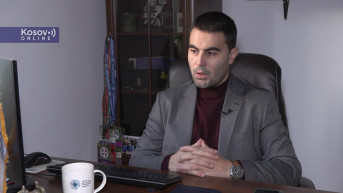
Military analyst Vlade Radulovic assessed that, after a long time, an increase in KFOR forces in Kosovo could be expected due to, as he said, a challenging security situation.
"When we talk about the security situation in the Balkans, I think the biggest focus is on Kosovo and Metohija. While Bosnia and Herzegovina is another neuralgic point, often in Western media, you'll hear that perhaps Bosnia and Herzegovina is more realistic as a potential hotspot, because there is a certain number of KFOR members on the territory of Kosovo. However, due to all the political tensions and everything happening on a daily basis between Belgrade and Pristina, all the tensions regarding the Serbian dinar and everything that has been relevant recently, including the case in Banjska, all confirm the thesis that the situation in this part of the Balkans is unstable. Such events, statements by politicians, and the overall atmosphere in which we find ourselves reinforce this narrative, and it's very difficult to discern whether tensions are fueled by politicians' statements, repression of Serbs in Kosovo and Metohija, certain actions being taken, or statements from the East and the West," Radulovic said for Kosovo Online.
He reminds that the arguments of Kosovo are often used both in the East and the West when it suits their perspective.
Regarding the increase in KFOR personnel, he believes that after a long time, there could be a numerical reinforcement of the mission.
"Although there has been a trend of decreasing KFOR personnel in recent years, if you look at the approximately 55,000 there were in 1999 and 2000, we have now come down to about 3,600, which is far below the initial number. Recently, after a long period of declining KFOR personnel, we have seen an increase to over 4,000 KFOR members. The British, Americans, and even the Croats have mentioned deploying additional members of their armed forces within the Croatian national contingent on the territory of Kosovo and Metohija. It seems to me that we can expect further KFOR presence. Don't forget that there are some forces designated to be quickly relocated from various bases across Europe to Kosovo if needed. After all, certain exercise scenarios are conducted precisely based on this principle. Therefore, it seems that we are in a period where we will see an increase in the number of KFOR members, but on the other hand, I wouldn't claim that thousands and thousands of new soldiers can be expected. We can talk about several hundred soldiers if the situation dictates so, unless we come into a conflict situation," he said.
Speaking about the announced formation of a "military Schengen," Radulovic emphasizes that this is not a new issue when it comes to NATO.
"The need arose for a short period of time to traverse greater distances or, if you will, in the field from the Atlantic coast or from Western Europe, read the Netherlands, Belgium, and France to the eastern part of Europe closer to the Baltic members, more specifically Poland. The axis of that military Schengen is precisely the line Netherlands-Germany-Poland, and I think it will be the subject of the most discussion both in Washington and it remains to be seen if it will come to life. Despite the fact that there is the Schengen we know within the EU and that the mentioned countries are also NATO members, and despite the cooperation, bureaucracy is still a segment that you can't avoid and that requires a certain amount of time and procedures. The idea is to bypass as many procedures as possible and put them aside in case of need so that there is no need for letters and notifications to be sent, but that vehicles and packaged compositions can easily reach from one part of Europe to another in just a few hours," Radulovic explained.
Regarding Admiral Rob Bauer's visit to Montenegro, Radulovic considers it "standard and protocol."
"It's part of some previously agreed plans and the dynamics of visits to Montenegro as a NATO member and a country that aspires to become part of the EU, as a country whose armed forces participate in several missions worldwide. On the other hand, they have their national contingent within KFOR, I'm talking about staff officers engaged in Skopje. In that limited format, I still see a role for Montenegro. Montenegro has modest military potential both in personnel and in everything else, so even if it were to happen, and I don't have such information, I don't believe it would be more than a platoon," Radulovic said.


0 comments