
Radulovic: Arming KSF changes things on the ground; Turkey, UK, and Germany help them the most
Investment in the Kosovo Security Force (KSF) has increased by nearly 200% since the Self-Determination Movement came to power with Albin Kurti as Prime Minister.
Drones, mortars, armored vehicles, joint exercises, and training with the armed forces of the United Kingdom, Turkey, the US, Germany... are just some of the projects that have been implemented, along with the procurement of equipment.
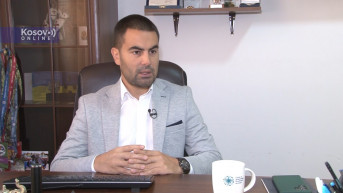
Military analyst Vlada Radulovic, speaking to Kosovo Online, says that concerning the arming process of the Kosovo Security Force and what Pristina strives to establish both de facto and de jure, it is the Kosovo army.
"They have been in this process for several years, since the end of 2018, to be precise. In accordance with that, conditionally speaking, in these three phases, as proclaimed in Pristina, it was expected that some specific procurements and progress would be made in this period after 2022. From that perspective, they are just working on what they had previously planned," Radulovic says.
"They receive help from abroad, without which they would not be able to realize this, and despite the fact that there is always a finger pointed at the US, I would say this is not the most accurate approach. It seems to me that Turkey provides much more help, followed by the United Kingdom, and I wouldn't leave out Germany either," he added.
Radulovic believes that Turkey leads in "supporting the KSF," among other things, regarding armored vehicles, light tactical vehicles, and even some lethal means, systems such as 120mm caliber mortars.
"Specifically, I mean the cooperation between two Turkish companies, BNC and ASAS, with Kosovo. From this perspective, to be honest, it's not clear to me why Pristina is not blamed for this. Pristina, regardless of the actions taken by European countries, has never faced significant or serious condemnation. You will recall that during certain incidents and situations that could escalate, initiated by Pristina, comments were received primarily from the EU or more specifically from the Quint, calling on both sides to exercise restraint, even though we didn't have anything to do with that. On the other hand, why am I exempting the US? Because it seems to me that they are somewhat supportive of Kosovo's independence, and in certain moments, they have known how to take specific actions toward Pristina that didn't just remain in words. Don't forget the blocking or stopping of certain aid to the KSF, refusal to participate in certain activities, and the denial or disapproval of visas for some high representatives from Pristina and the KSF in particular. It seemed that other programs were also halted, and Washington tried in various ways to show Pristina that it cannot do everything as it pleases," he says.
Radulovic also believes that the arming of the Kosovo Security Force and the desire to form the Kosovo Army is a problem for the Serbian Army in terms of danger and fear, as well as for Serbs living in Kosovo.
"Pristina couldn't have its armed forces in any document or agreement, and we see that they have gone far in that direction. Basically, nothing will change because you can't compare whatever Pristina has with the Serbian Army; that's far from a comparison. But does the arming of the KSF change the situation on the ground? Yes, it does because it's different when you have certain security forces, like the former Kosovo Protection Corps, for example, and now when you have mortars, anti-tank weapons, and potentially even lightweight portable anti-aircraft defense systems for actions against low-flying planes or helicopters, for example. This already changes things on the ground, but not to the extent that should cause concern in Belgrade," he stated.
Radulovic also points out that in recent times, the idea of Greater Albania has gained more support, and Albin Kurti is absolutely one of the spearheads of that ideology.
"I haven't noticed that much noise is being made about it. Very often, we are the ones who initiate and say look what's happening in North Macedonia, Greece. Why is Pristina not receiving reprimands for all of that, that is a question for someone else. It is up to us to see how, where, and what we will do, and to take care of the Serbs living in Kosovo and Metohija. We can see that any frozen conflict, a small nerve center or area in the world, is currently very close to escalating into a broader conflict. When there are such ruptures at the global level, it is reflected not only at the regional but also at the local level," Radulovic emphasized.
0 comments