
Radulovic: Security dilemma and obsolete equipment are pushing the region into an arms spiral
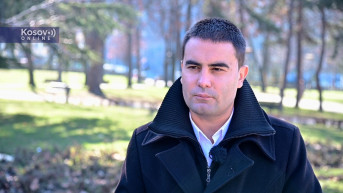
Military analyst Vlade Radulovic told Kosovo Online that the armament of Western Balkan countries follows the classic “security dilemma”, in which every move by one state is perceived by others as a threat and answered by strengthening their own capacities. As he explains, such a spiral further fuels the arms race in the region, even though a large part of procurement is motivated by the replacement of obsolete equipment from the 1990s.
The portal “Global Firepower” published its latest ranking list dealing with a comparative analysis of the military power of all countries in the world. According to it, Serbia has the strongest army in the region and is ranked 63rd globally. Radulovic notes that rankings published by various organizations and portals provide a general picture, but are not absolute indicators.
“They give different outlines, they can roughly show us certain directions, they support certain claims, so in some cases it is budget allocations for defense, in others population size, that is, the number of members of the armed forces and paramilitary formations and their share of the total population, depending on the list. But the essence is that they roughly, at least in some contours, point to where a given country stands, that is, what its military power is like. The results of those lists are not ‘set in stone’, they are not absolute and you do not have to believe in them one hundred percent. They are more of a kind of guideline, an approximate outline of what a country’s military power looks like,” he explained.
According to Radulovic, the key parameters of military power depend on the type of armed forces and the resources a state possesses.
“In some cases it is manpower, numbers and personnel, and certainly number one is the issue of nuclear potential, that is, the nuclear arsenal or, as it is called, strategic forces. So, when you exclude a few countries – the two largest that control almost 90 percent of nuclear warheads, namely the United States and the Russian Federation – you have one of the key parameters. Then come numbers and the technical aspect of modern equipment, that is, modern weapons systems present in certain armed forces. These are the key parameters. You cannot compare great superpowers with small countries that have only a few million inhabitants or even fewer, or perhaps do not have their own armed forces at all, because such examples also exist in the world,” our interlocutor says.
Radulovic also explains why Western Balkan countries invest in armaments – whether because of the global situation or internal needs.
“We can look at the issue from two sides. First, NATO member states are following the line of increasing defense spending, for example from two percent to a nominal five percent of the budget, including cyber security and critical infrastructure. The other side of the coin is that much of the equipment was inherited from the time of the JNA (Yugoslav People's Army) or the Warsaw Pact and has already become obsolete. The modern battlefield dictates new trends that you have to follow, which requires additional investment and new financial allocations,” he points out.
He notes that there is also a theoretical aspect – the well-known “security dilemma”.
“When one actor arms itself, another sees it as a threat and raises its own capacities, which creates a spiral that is also present in theory. When we talk about the Balkans, especially the area of the former Yugoslavia, it is crucial that in the last 7–10 years the procurement of equipment has been motivated by the fact that it was inherited from the 1990s and has become outdated,” Radulovic emphasizes.
Asked whether there is currently a real military threat in the region, he answers that everything depends on whom you ask.
“In Europe today, apart from Ukraine, there is only one more neuralgic point – the Balkans. We have the unresolved issue of Kosovo and Metohija, the presence of international forces, and on the other hand tensions in Bosnia and Herzegovina. Sporadic incidents against the Serbian population in Kosovo and Metohija – from arrests, raids on facilities, beatings, to shootings at civilians and children – show that the security situation in the region is not great,” he points out.
Nevertheless, he stresses that NATO is present and that major actors are monitoring the situation, so they do not allow anything to happen “outside their plans”.
“Through KFOR, NATO is present in Kosovo and Metohija, while the longest-running EUFOR mission in Bosnia and Herzegovina is part of the Berlin Plus mechanism, which envisages the rapid deployment of up to 5,000 NATO personnel in the event of a security breach. Essentially, the area is kept under control, although there are occasional incidents, but the situation is being monitored,” Radulovic says.



0 comments