
Radulovic: The threat of terrorism in the Western Balkans is constant, Kosovo and Bosnia and Herzegovina are critical points
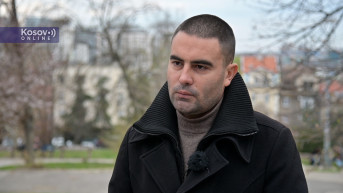
Military analyst Vlade Radulovic assessed for Kosovo Online that the security threat of terrorism in Europe, including the Western Balkans, is absolutely real and includes organized groups, so-called “lone wolves,” and the increasingly significant cyber domain. He added that Kosovo and Bosnia and Herzegovina are “neuralgic points” of the region, but that the risk is shared equally by all.
Radulovic emphasizes that threats should be viewed through three dimensions.
“The first are organizations, groups, or formations linked to some of the existing terrorist organizations, which do not necessarily have to be connected to Iran. So they do not have to be pro-Iranian organizations or groups, but may include others such as the Islamic State, Al-Qaeda, and similar. The second dimension is precisely those lone or individual perpetrators of terrorist attacks, as some call them ‘lone wolves’,” he said.
As a third, often neglected aspect, Radulovic highlights the cyber domain.
“There is a third dimension which, it seems to me, is often overlooked, and that is the cyber domain. As it is colloquially said, hackers in certain premises and darkened rooms…, but terrorist attacks are also carried out in that domain,” he warned.
Speaking about the danger of activating so-called “sleeper cells” and radicalized individuals, Radulovic points to the continuity of threats lasting more than two decades.
“That danger is absolutely real. Since the beginning of the global war on terror, that is, from the attack by members of Al-Qaeda in 2001 on the Twin Towers in the United States until today, I would say we have had a permanent danger or threat,” he said.
He adds that there is almost no year without an attempted or carried-out attack on European soil.
“When you look at it, there is almost no year that passes without a terrorist attack occurring or at least without a group or individual being thwarted who planned, prepared, or provided logistical support. From that perspective, the threat is real. Its intensity varies from period to period, and we have also witnessed that during the peak of the migrant crisis,” Radulovic said.
A particular problem, he notes, are individuals who are not in the records of security services.
“What is a much bigger problem are individuals who do not necessarily belong to any group or organization. Such persons are not in police records and are difficult to detect. They essentially self-radicalize by following certain online platforms and creating a narrative in their minds, and at some point decide to carry out an attack, or do something that can be characterized as a terrorist act. We have witnessed all of this, as you may recall, in numerous European cities, including during the Christmas holidays,” he explained.
Radulovic warns that additional security challenges are posed by the migrant crisis and returnees from battlefields.
“I am fairly certain that Europe still does not have a completely clear picture of who has arrived through those massive migration waves. On the other hand, there are returnees from the ranks of the Islamic State from the Syrian and Iraqi battlefields, who have unfortunately found refuge in the Balkans as well,” he said.
Speaking about the Western Balkans, he notes that the presence of individuals and cells is not in question.
“I think there is no need to think too much about that. It is very clear. The United States Department of State has said it, Interpol has said it, the United Nations has said it… Lists with names and surnames have appeared,” he stated.
He points out that, considering territory and population, the largest number of members of the Islamic State who went to the Syrian-Iraqi battlefield came from Kosovo.
“A portion of them, as well as their families, have returned to Kosovo and Metohija. That is one issue. Another is that, when you look at terrorist attacks in Europe over the past 20 years, it would be difficult to list those that had no connection to Bosnia and Herzegovina. I do not mean the state itself, but individuals who at some point stayed there, had its documents, were connected to people from there, or received weapons and equipment from there,” the military analyst said.
Asked about the region’s vulnerability, he assessed that it is shared.
“We share this risk primarily because we share everything that has affected the Western Balkans after the breakup of Yugoslavia, from political instability to everything happening in our societies, as well as the fact that we have these two neuralgic points called Bosnia and Herzegovina and Kosovo and Metohija, and therefore we must remain vigilant at every step,” he stressed.
He added that a great burden lies on the security apparatus and especially on the intelligence community due to the need to exchange information with counterparts around the world.
As an example of security challenges in Serbia, he recalled an incident in Belgrade.
“This is also evidenced by the fact that last year we had that attack on a member of the Gendarmerie who was guarding the Embassy of Israel in Belgrade here in Belgrade,” Radulovic concluded.



0 comments