
Ragus: Kurti’s goal is the ethnic cleansing of Kosovo and Metohija of Serbs, the CSM guarantees our people what was taken away from them
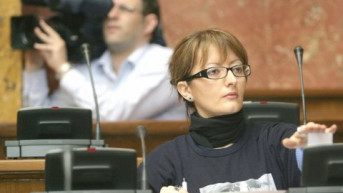
Deputy Speaker of the National Assembly of Serbia Marina Ragus stated that the goal of Kosovo’s acting Prime Minister Albin Kurti is the ethnic cleansing of Kosovo of Serbs, stressing that the international community has no answer to the question of how it is possible that in the 21st century, the life of one of Europe’s oldest peoples has been effectively erased, RTV reports.
Ragus said that there is much that is compromising when it comes to statements from certain political centers, pointing to the “deafening silence” on the subject of human and minority rights of the Serbian people in Kosovo.
“Kurti’s ultimate goal is the ethnic cleansing of Kosovo and Metohija of Serbs—that is, the creation of what they like to call a new reality—so they do not recognize Resolution 1244, which we uphold, as well as the preamble of our Constitution. The Community of Serb-Majority Municipalities guarantees our people what has been taken away from them. President Vučić is the only president who has officially requested the return of 999 members of our security forces, based on Resolution 1244. Knowing the answer, he understood that it was very important to leave an official written record. Because we have a mandatory duty to protect our people, in our territory,” she said.
Ragus stated that Serbia’s position in international relations today is significantly stronger than it was in previous years, because, she said, concrete diplomatic steps have been taken that previous governments did not undertake.
She added that under the current policy, 28 recognitions of Kosovo’s independence have been withdrawn, but she would not comment on the total number of countries that have rescinded recognition, saying she leaves that to President Aleksandar Vučić. She emphasized, however, that this has led to a completely different position for Serbia in many international forums.
“Much of this is synchronized. When you put all of this into a broader context, it is clear that we are entering a period of resolving the Serbian national question,” she stressed.
Ragus also addressed current developments in the Republic of Srpska, calling it “catastrophic” that by stripping President Milorad Dodik of his mandate, there is an attempt to annul the electoral will of the people.
“I would like the outcome to be political. I really liked President Dodik’s response that he will defeat them by political means on the political field. I don’t think it will be a short fight, but I believe that when the big players reach agreements on the geopolitical stage, there will be room to think in a somewhat more constructive way,” she said, expressing her full support for the Republic of Srpska.
She added that President Vučić’s reaction in that situation was rational and statesmanlike, because, she said, he ensured the future by making decisions through the National Security Council.
Ragus also said that the letter from Serbian Parliament Speaker Ana Brnabić to the European Parliament—sent regarding the post by EP rapporteur for Serbia Tonino Picula, who marked the anniversary of Croatia’s “Operation Storm” with a photograph in military uniform—could produce results, but that depends on decisions made in Brussels.
Ragus stated that certain power centers, by selecting Picula as the EP rapporteur, wanted to send a particular message to Serbia, adding that the Croatian politician has publicly boasted several times in the past about participating in the wars in the former Yugoslavia during the 1990s.
“Whether that will happen or not depends, of course, on those centripetal and centrifugal forces in Brussels,” she said.
She noted that the actions of some European officials, such as Picula, are part of a familiar pattern that, in her view, will continue into the future.
She said she regretted this, because she believes that together they could have an entirely different and better future, but in the end, that is really only their problem.
“After all, you know, when someone has Jasenovac, it is very difficult to ignore that in any way. And when they carry out ethnic cleansing during two operations—‘Flash’ and ‘Storm’—and we often forget about ‘Flash,’ with so many people who had lived there for centuries, then they can only do what they are doing. But that really is only their problem,” she concluded.

0 comments