
Raul Cunha: The Kosovo issue has not been resolved
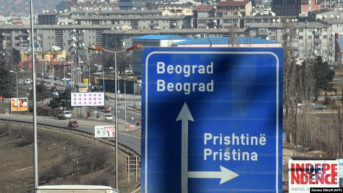
Former high-ranking KFOR and UNMIK official, Portuguese Major General Raul Cunha, says that UN Security Council Resolution 1244 and the Kumanovo Agreement have never been fully implemented, especially in aspects concerning the guarantee of Serbia's sovereignty, but that this issue has not been resolved, Danas reports.
In his book "Kosovo: Unheard-of Seizure of Independence," which was presented in its Serbian edition last week in Belgrade, Cunha states that the situation in Kosovo has not yet reached its final stage, and one possible outcome could be as explosive as the Middle East.
When asked what the wars in Ukraine and the Middle East mean for resolving the Kosovo issue and whether they complicate it further, Cunha says that due to some minor similarities between these situations and the general lack of understanding of the key differences, it might be presented as though Russia’s annexation of rebel provinces is not legitimate.
"In this way, all ongoing independence movements could become more complicated," Cunha said in an interview for Danas.
He adds that the fact that Resolution 1244 and the Kumanovo Agreement were never fully implemented, particularly in relation to guaranteeing Serbia’s sovereignty, represented a significant blow to the UN’s reputation and fostered distrust in the ability of this organization.
"As far as I know, there are no territories currently under UN civilian administration. There is only the presence of civilians as observers of military forces for monitoring and separating warring parties," he said.
He emphasizes that he does not believe there was any involvement of British KFOR in the massacre of Serbian harvesters in Staro Gracko, as some diplomatic circles speculated.
"I don’t think there was any involvement, although it is widely known that there was unfortunate lukewarm behavior by some military forces, such as the French, German, and Italian forces during the Albanian uprisings in 2004," he added.
Cunha notes that he was not aware of any investigation into former UNMIK chief Joachim Rucker and his deputy Steven Schook, despite having been Rucker’s military advisor.
"I can reveal that in my report at the end of my mission, I expressed surprise that nothing was done when Mr. Schook and another senior UNMIK official joined the Kosovo government after the declaration of independence, which was an obvious violation of impartiality," he emphasized.
He added that Rucker had a mandate to at least show his opposition to Kosovo's unilateral declaration of independence, but he did not do so, nor did the UN leadership in New York.
When asked if KFOR overstepped its mandate last year during the protests by Serbs in the north over the entry of Albanian mayors into municipalities, Cunha answered affirmatively.
"In my opinion, KFOR, whose actions are still guided by UN Security Council Resolution 1244, exceeded its mission and sanctioned Kurti’s decision by guaranteeing security for the Kosovo special police forces, thereby taking sides. This provoked a violent conflict between Serbs and KFOR. In contrast to what was done, NATO will have only two options: either to escort Pristina’s police forces back south of the Ibar River or to open the border to allow Serbian military and police forces to enter northern Kosovo to guarantee the security of the local population," he said.
He stated that in his book, he advocates for the formation of the Community of Serb Municipalities, although critics see it as "the last cornerstone in the foundation of an independent Kosovo."
"In a certain way, the formation of this community could represent the EU’s concession regarding sovereignty, but under international pressure, and in order to guarantee the safety of the remaining Serbian population in Kosovo, this currently seems like the only diplomatic way to achieve this goal," he said.

0 comments