
Rrecaj: Great powers shape the fate of Cyprus; comparison with Kosovo impossible
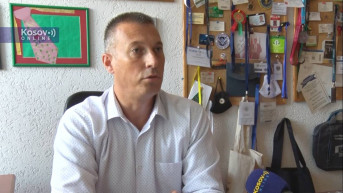
Professor at the Department of International Law at the University of Pristina, Besfort Rrecaj, says, on the occasion of 50 years since the division of Cyprus, that due to the geopolitical relations in the world, it is very difficult to predict when and how the unification of this state could occur. He also notes that this issue is not comparable to the Kosovo issue.
"The situation in Cyprus is very complicated, especially when we talk about its historical background. We have a territory that has been controlled by Turks in Northern Cyprus for decades, with the help of Turkey," Rrecaj says.
He emphasizes that the issue of Cyprus is complex from multiple angles.
The first is that the conflict involves two NATO members.
"We have Turkey and Greece, which fought over control of Cyprus in the 1970s after the turmoil that began at that time. On the other hand, we have Cyprus, which is a recognized member of the European Union," Rrecaj explains.
Hence, he continues, the statement by von der Leyen about creating a federation aligns with the official policy and unified stance of the EU regarding Cyprus.
"However, how this will translate into reality and how this issue will develop in the future is very difficult to predict due to the involvement of great powers. Especially when it comes to global geopolitical and political relations, particularly in Ukraine with the unprovoked invasion of Russia into Ukraine. Also, there is the complicated situation in the Middle East. I think that Europe cannot give itself any positive feedback regarding a more decisive policy toward Cyprus," Rrecaj emphasizes.
Asked how much the resolution of the Cyprus issue could be a potential model for Kosovo, this professor believes that these are "fundamentally different issues."
"There is a significant and fundamental difference between Northern Cyprus and Kosovo. In both cases, we have different factual situations. This was confirmed by the International Court of Justice in its opinion on Kosovo's Declaration of Independence, stating that it is not contrary to international law. In the case of Northern Cyprus, the situation is opposite. We have a clear UN Security Council resolution rejecting the declaration of independence by the Cypriot Turks and what is today known as Northern Cyprus. Thus, from a legal perspective, we have completely opposite situations that cannot be compared," Rrecaj emphasizes.
He adds that there is another difference.
"Above all, we have the factual situation of the Commission on Crimes against Humanity that did not happen in Kosovo, unlike the situation with the Cypriot Turks where the Commission found a completely different situation," Rrecaj concludes.



0 comments