
Peovic: Cyprus and Kosovo share a series of unsuccessful solutions by the international community
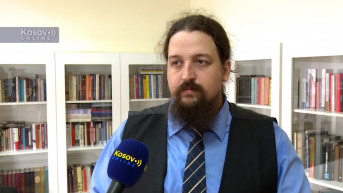
Researcher at the Institute for European Studies, Srboljub Peovic, assesses that despite the EU's intentions for unification, Turkey will not abandon its vision for a solution for Cyprus and that this, along with the case of Kosovo, highlights a series of unsuccessful solutions by the international community to find a compromise formula.
“There continues to be a series of diplomatic positions that have lasted since the 1960s. On one hand, there is a search for some solution for a federal state that would include the so-called Turkish Republic of Northern Cyprus. Turkey, on the other hand, does not want to accept this. It wants either the whole of Cyprus to be under Turkish control or at least Northern Cyprus, and it will not agree to such solutions. There have been no major changes since the Annan Plan in 2004,” Peovic tells Kosovo Online.
Commenting on 50 years since the division of Cyprus and claims by European officials that they will not give up on the island’s unification, Peovic says that despite strong words, in practice, the situation will not change much.
“The EU will theoretically remain in the same position it has held since 1997 and Cyprus's application for EU membership. I don’t see any significant changes there. What will remain a fact is that Northern Cyprus will stay outside the EU, it will de facto remain separate, and this state of affairs will continue into the future,” Peovic believes.
He adds that no matter how incomparable they may seem, the cases of Cyprus and Kosovo have several key common points.
“What connects them first is ethnic animosity. We must remember that Cyprus also experienced mass pogroms. For example, a third of Cyprus's population does not live where it did half a century ago. Another common point is the series of unsuccessful solutions by the international community to find some compromise formula. What separates them is primarily the stance of the West, the stance of the European Union, which fully defends Cypriot sovereignty, which it did not do for Serbia,” Peovic says.
He continues that from a foreign policy perspective, there is a significant difference in the approach to further EU expansion because Cyprus was a model they no longer wanted to follow.
“Although Cyprus is nominally recognized as a state that spans the entire island, except for two British bases, in practice it functions differently. We have two parallel systems that have been operating completely separately for half a century. I will remind you of another similarity. Turks who wanted to cooperate with Greeks, those who were in Greek unions half a century ago, were killed in the streets. So, yet another parallel with the case of Kosovo and Metohija. However, on the other hand, what I think connected them, at least until recently, is that there were completely two parallel systems on one territory that functioned without any contact points,” Peovic believes.
He emphasizes that Cypriots see many similarities with the Serbs and the situation in Kosovo.
“Cypriots see many similarities with Kosovo and feel great solidarity with the Serbian people in Kosovo. Among other things, we must remember that in 1999, they attacked the American embassy in their country when there was a war in our province. However, the fact is that the diplomatic positions of the West and much of the world are different. No state recognizes the Turkish Republic of Northern Cyprus. It also has significant demographic problems. The population is declining. Turkey is sending new settlers from its mainland, leading to tensions between these two groups of Turks. The Turkish community is not demographically dominant, and a number of factors are different than in Kosovo,” Peovic concludes.


0 comments