
Sain: The international community tried to mitigate the events in Kumanovo

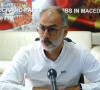
Correspondent for Politika from Skopje, Zeljko Sain, pointed out the difference between the events in Banjska on September 24th and in Kumanovo in 2015, noting that the international community had characterized the Kumanovo incident as an isolated phenomenon even though a group of armed individuals in KLA uniforms had crossed into foreign territory. He said that the conflict in Banjska was characterized as a terrorist act, even though it involved people fighting for their freedom on their own territory.
Sain reminds for Kosovo Online of the events on the international stage in 2015 when the Berlin Process was formed and subsequently suspended at the same time. Jean-Claude Juncker came as the President of the European Council and drew a line, indicating that EU expansion with Western Balkan countries would not happen.
"Various tensions were happening within Macedonia's political scene at that time, with a part of the opposition attempting to overthrow the government. Someone likely exploited this to escalate tensions in the Balkans and to suggest that the Western Balkans indeed does not deserve to be present in the EU for security reasons," Sain says.
He states that after the Berlin Process, the Minsk Agreement was supposed to be implemented but wasn't. Later, it was revealed by Hollande and Merkel that it was done to prepare Ukraine for war.
Sain noted that the US, EU, NATO, and OSCE had issued a joint statement after the events in Kumanovo, stating that the attack had been an isolated phenomenon, and they hoped it wouldn't affect social events in Macedonia.
On the other hand, Kosovo claims it was a terrorist attack, Sain says. and the same countries and organizations are making that statement.
As he says these countries recognized Kosovo's independence, and their positions aren't different only regarding Kosovo but also in other situations, such as the NATO bombing of the Federal Republic of Yugoslavia. He also mentioned that Germany, under its constitution, had no right to participate in the bombing, and there was no situation where world peace was threatened, as required by the UN Charter.
"On that occasion, there wasn't any of that, and there wasn't an attack on any NATO country that would have allowed them to intervene. In fact, Walker provided incorrect information that genocide was occurring in Kosovo, and the US, based on this erroneous information, organized the bombing, just as it happened now when Vucic was interviewed and stated that the Serbian Army was expanding near the administrative line, when in fact, it was the other way around. This incorrect information went out, and the attack on Serbia began, of course, through political means. When we look at this difference, we can see that it was set up differently," he added.
As he emphasizes, "on the one hand, it's an isolated phenomenon in Macedonia, and on the other hand, they are terrorists, even though they are people who were defending their freedom, who didn't come from the foreign territory but were at their own homes. In Kumanovo, we have an army of people who were trained, wearing KLA uniforms, and they invaded the territory of another country".
"At the end, the leadership of Kosovo at the time rewarded the families of all the participants in the attack in Kumanovo with around two hundred thousand euros each, and at the meeting convened by the President of Macedonia, then Ivanov, discussing security, everyone attended, including the opposition led by Zoran Zaev. However, no one from the two largest Albanian parties, which were in power at that time, showed up," he points out.
Sain notes that the international community tried to mitigate the events in Kumanovo in some way.
"We didn't have anything significant, especially since the process of integrating the Western Balkans into the EU was halted. And here lies the most significant political situation. In the end, we have another situation where the Open Balkan initiative emerged from the Berlin Process in 2019, with its greatest value being the maintenance of peace in the Balkans. The moment the Berlin Process was reinvigorated, we witnessed a tense situation in Kosovo and an armed conflict. It's as if the West is trying to provoke some disturbances precisely in this region because they need it for other things," he says.
He adds that no one in North Macedonia remained indifferent to the events in Banjska, especially since they know what happened in Macedonia on two occasions.
He reminds that, in 2001, when the Ohrid Agreement was reached and Albanians entered the Government after an armed conflict, there was a situation where the army fighting for Albanian rights became an official party – today's DUI, and everyone entered the government.
On the other hand, he notes that there is a situation in Kosovo where the KLA, from an illegal organization, becomes a legal formation, and today they are the police in Kosovo.
"We have a system where illegal organizations become legal, parties are formed, they enter the government, and on the other hand, in an expanded composition, they transform into either the police or the army. Fortunately, for now, we don't have an army in Kosovo yet, and we need to be cautious about how the situation will develop further. But here we also have Resolution 1244 that will help set things right in the UN, but it takes time," Sain concludes.


0 comments