
Savkovic: The political West wants Turkey in “its orbit”
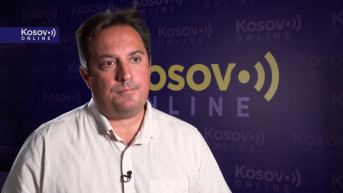
Senior advisor at the ISAC Fund, Marko Savkovic, assessed that next year’s NATO Summit in Turkey indicates that the West and NATO are doing everything possible to keep this country in “their orbit,” while at the same time official Ankara “has special interests in the Western Balkans.”
“The political West is making a real effort to keep Turkey in its orbit, Turkey as an ally. We remember how, after the 2016 coup attempt, relations between the West and Ankara greatly cooled. At one point there was even the possibility that Turkey could be suspended from NATO membership; it came very close to Russia. At one point, it wanted and tried to acquire Russian weapons and military equipment instead of American. Traditionally, the U.S. was the country Turkey relied on. But that did not happen,” Savkovic told Kosovo Online.
He pointed out that Turkey has recently gained “growing importance” as a mediator in the Ukrainian crisis, but also in Middle East developments, which is why it is a “logical decision” for Ankara to host the next NATO Summit.
“In general, major powers want to have a country through which it is possible to communicate with the ‘other side’ you are opposed to. Turkey, I would say, is such a country in this case. Of course, it is a mid-sized regional power capable of projecting its strength in its immediate neighborhood. There is no solution to the situation in the Middle East without at least a constructive role for Turkey. It is very important in communication with Russia, and its relationship with Greece must also be monitored. Greece is indeed a NATO ally, but we know how complex that relationship is,” Savkovic explained.
Asked how much the next NATO summit, to be held in the region, will affect the Western Balkans, this analyst stressed that this fact “is not without significance,” but reminded that the region is not only on “NATO’s agenda,” but that many countries here are members of the Alliance.
“I believe these countries will already nominate some of the topics, that is, problems we are all facing together here. But NATO’s role, primarily focused on the Ukrainian crisis, I see above all in the context of stabilizing circumstances. NATO is monitoring the situation, it is not activating itself because we do not yet have an outbreak of conflict here, but it will certainly try to send the message that they are present for any eventuality, to at least guarantee that semblance of stability in the Western Balkans,” Savkovic said.
He added that Turkey is not only an important NATO member but also has “special interests in the Western Balkans.”
As part of the regular rotation at the helm of KFOR, the new commander of this mission is Turkish General Özkan Ulutaş, who has already held this post before.
Savkovic said that such a choice is not surprising.
“If we look at who the commanders have been in recent years, it has always been either someone from Italy, Hungary, or Turkey. As a rule, it is always one of the countries either neighboring or in relatively close proximity, and which are particularly interested. After all, whose contingent is, numerically speaking, more significant within the total composition of KFOR, which, as we know, is no longer as large as it once was. That is why I do not attach any particular significance to this appointment,” Savkovic said.
He reminded that the Turkish general, like all previous KFOR commanders, will be accountable to NATO structures.
“He does not primarily answer to Ankara, his responsibility is to the mission, which is still a NATO mission—the longest-running NATO mission at present—and he will have to act in accordance with the tasks assigned to him,” Savkovic noted.



comments