
"Balkan Peace Platform": Can Turkey reconcile the region?
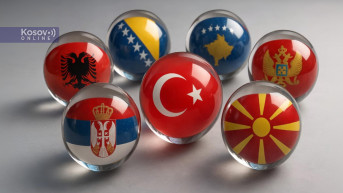
The first meeting within the framework of Turkey's initiative "Balkan Peace Platform" was held in Istanbul at the end of last week. While it presents a great opportunity to untangle numerous regional uncertainties "with a neighbor's help," the question remains whether Ankara is truly capable—or merely aims to impose its leadership role in the Western Balkans, sources from Tirana to Belgrade tell Kosovo Online.
Written by: Djordje Barovic
"The need to strengthen regional dialogue mechanisms is greater than ever. We must learn from our shared history and take responsibility for shaping our future. Stability can only be built together," stated Turkish Foreign Minister Hakan Fidan after the meeting.
Turkey has long sought to expand its influence in the Western Balkans through investments and military cooperation. Its influence is significant not only in Kosovo but also in Bosnia and Herzegovina (Bosnia and Herzegovina) and Albania.
Serbian President Aleksandar Vucic recently warned that Turkey and other countries are "actively working" on securing more recognitions of Kosovo's independence.
Analysts caution that this is part of the "strategic depth" doctrine established by Ahmet Davutoğlu in the early 2000s. Turkey has also been a key supplier of weapons and equipment to Kosovo’s security forces, having donated $1 million just a year ago.
Kosovo’s Defense Minister Ejup Maqedonci stated then: "This donation is part of the Turkish government’s foreign military support program. The relations between our two countries have always been at the highest level, and Turkey’s contribution to enhancing the capabilities of the Kosovo Security Forces is ongoing—both in terms of training and military equipment."
Meanwhile, Turkey continues to increase its influence in and Albania. According to the Bank of Albania, Turkish investments in Albania have reached €1.22 billion, with €204 million invested in just the first nine months of last year—a 62% increase over the same period in 2023.
After meeting with the President of the Grand National Assembly of Turkey, Numan Kurtulmuş, in mid-July, Albanian Parliament Speaker Elisa Spiropali highlighted the deepening ties between the two countries, calling Turkey a natural friend and partner for regional peace.
"We are grateful for the support of 18 Turkish MPs for Kosovo's accession to the Parliamentary Assembly of the Council of Europe. We also value Turkey's role in promoting dialogue and peace, including President Erdoğan's efforts to mediate in the Ukraine conflict," Spiropali emphasized.
Regional analysts agree that any initiative helping to resolve outstanding issues in the Western Balkans is welcome. However, many remain skeptical about whether Turkey’s "Balkan Peace Platform" has the necessary capacity.
A View from the Waiting Room
"This initiative has several dimensions. Let’s start with the strangest and funniest one: Turkey has been an EU candidate since 1987, negotiating since 2005. The six countries gathered in Istanbul are all in the EU waiting room alongside Turkey. So, this is a gathering of those waiting," said former ambassador and analyst from Skopje, Risto Nikovski.
The second dimension, he notes, is Ankara’s awareness that EU enlargement is unlikely to happen.
"Perhaps an exception will be made, which also seems unlikely. Hence, Turkey is trying to initiate a new platform for Balkan peace. This is just the beginning—ministerial visits to Istanbul. The actual goal is to organize a summit chaired by Erdoğan. That’s the third dimension—Turkey’s ambition to play a larger regional role."
Nikovski points out that Turkey is already one of the biggest investors in the Western Balkans and maintains good relations with all regional countries.
"They even have balanced relations with both Kosovo and Serbia. That’s a logical outcome of their regional engagement," he said.
The fourth dimension, according to him, is Turkey’s broader ambition to play a greater role on the global stage.
"They are relatively successful, though some actions—like those in Syria—are debatable. Erdoğan can be satisfied with his aggressive, omnipresent foreign policy. These are the ambitions and goals of Turkey."
Despite acknowledging the value of initiatives that encourage agreement and peaceful resolution of issues in a region plagued by mistrust and conflicts, Nikovski remains skeptical.
"This initiative has no chance of success. It will inevitably clash with the EU, which is already active and wants to retain a leading role. The Americans are also present and dominant, especially in the six countries outside the EU. Then there’s the Berlin Process... In essence, all avenues for mediation or resolution have overlapped and been exhausted."
He points to the failure of the "Open Balkan" initiative, which had potential but did not succeed. "This will likely share a similar fate," Nikovski added.
While he acknowledges that Turkey’s centuries-long presence in the region gives it a certain understanding of local mentalities and potential for mediation, he sees little hope for this initiative.
"The initiative was barely covered in the media. Our Foreign Minister’s participation was only briefly mentioned. That’s also telling," he concluded.
Key Regional Challenges
Political analyst from Tirana, Frok Çupi, highlights Kosovo, the situation in Bosnia and Herzegovina, and Zagreb–Sarajevo relations as key challenges in the Western Balkans.
He believes these will be the focus of Ankara’s platform, as well as the source of diverse regional reactions.
"The hottest issue is the dialogue between Belgrade and Pristina. Will Turkey side with Belgrade due to its ties with Russia or with Kosovo, where it has invested heavily and where the population is predominantly Muslim?"
He also points out the longstanding political tension within Bosnia and Herzegovina and strained Sarajevo–Zagreb ties.
"Turkey has pledged to improve relations between Croatia and Bosnia. This is a 30-year-old wound. If progress is made, it would be significant. If not, it would show Turkey’s limitations."
Çupi questions Turkey’s actual capacity to mediate.
"Turkey is a NATO member, but so are most Balkan states. They share equal status. Yes, Turkey has greater military capacity, but in terms of alliance status, they’re equal," he said.
Religion, he added, is another sensitive factor.
Asked about Ankara’s motives, Çupi replied: "Turkey believes it has an advantage in this part of Europe, especially economically and militarily. It’s a big country that hasn’t caused problems in the Balkans recently. Even its disputes with Greece date back to the 1923 Treaty of Lausanne."
Çupi sees President Erdoğan as leading Turkey into a new phase of influence.
"Turkey is now acting as a mediator between the U.S. and Russia in Ukraine. That’s a new geopolitical reality."
He also raises the question of whether Turkey has Washington’s blessing.
"I think it does. The way Trump dealt with Erdoğan was cautious and respectful, hinting at tacit approval."
He stresses that stability in the Balkans is essential for the U.S., which may prefer Turkey’s involvement over direct engagement.
Potential obstacles, he says, include the region’s EU aspirations and how Greece will react to Turkey’s initiative.
"How will Greece respond when it wakes up to this Turkish move? There are old tensions. Until recently, Greece was the region’s informal leader. Now Turkey is vying for that role."
National Interests
From Belgrade’s perspective, the view is different.
Security researcher Nikola Vujinovic believes Turkey could play a key role in regional reconciliation—if it genuinely wishes to.
"Turkey wants to position itself as the main regional actor for peace and security. This is one of many initiatives to showcase its power in the Balkans. But its actions in Syria show another side."
He doubts the initiative’s sincerity.
"This is Erdoğan’s diplomatic maneuver to elevate Turkey's global standing. Internal instability is being projected externally. The initiative does not consider the national interests of Balkan states, especially Serbia."
Vujinovic calls the platform "a nice excuse to visit Istanbul."
"It has no real value."
However, he believes Turkey could be a more effective mediator than past international efforts—if it showed genuine goodwill.
"Right now, that goodwill is missing. Turkey uses Kosovo Albanians and Bosniaks as instruments of its broader strategy. If that changed, its role could be substantial."
He recalled that a century ago, in the Kingdom of Yugoslavia, Turkey helped ensure Muslims were loyal citizens.
"If it applied that model today, it could be an excellent mediator."
A Balkan Broker?
Diplomat and former Kosovo ambassador to Italy, Albert Prenkaj, told Kosovo Online that Turkey is using the stagnation of the Berlin Process and Open Balkan initiative to position itself as a regional "broker."
"After mediating in the Russia–Ukraine war and influencing Syria, organizing a platform to find lasting solutions to open Balkan questions aligns with Turkey’s foreign policy. With Berlin Process and Open Balkan stalled, Turkey sees an opening."
He recalls past regional platforms—SEECP, RCC, Berlin Process, Open Balkan—aimed at cooperation and EU integration.
"Most include EU and NATO countries. Only Open Balkan was led solely by Albania, Serbia, and North Macedonia, without Brussels’ blessing. The U.S., however, viewed it positively."
Disagreements between Washington and Brussels on these platforms, he adds, further complicate the landscape.
Prenkaj emphasizes Turkey’s two-decade proactive foreign policy aimed at becoming a strategic Mediterranean power.
"Turkey has acted as a broker in Ukraine, Syria, the Sahel... Fidan’s initiative fits into that pattern."
He connects it to Davutoğlu’s "strategic depth" and "zero problems with neighbors" doctrines.
"The goal is to transform Turkey’s neighborhood into a zone of cooperation and integration. This initiative seeks what previous ones failed to achieve: economic cooperation, and a strong Turkish presence—economically, culturally, politically, and in terms of security."
He concludes that Turkey’s platform could be seen as a counterpart to the EU’s Growth Plan for the Western Balkans.
"It parallels the EU’s plan to integrate the region into the single market, boost cooperation, deepen reforms, and accelerate socio-economic convergence with the EU," Prenkaj said.


comments