
Sejdilar: Gorans often faced the threat of assimilation, but Bulgarians won't succeed either
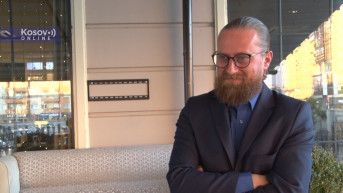
Nedzmidin Sejdilar, a council member in the Municipality of Dragas representing the "Movement for Gora," states that "Bulgarization" is something that Gorani people have to pay for the Bulgarian passports some obtained in the past, however, he is confident it will not happen.
"Bulgarization of Gorani people is something we have to pay for a few passports that some obtained in the past, starting from 2004, 2005, when many pursued these passports, went to Sofia, and fabricated stories about their ancestors being Bulgarians to claim Bulgarian citizenship. The number mentioned is inflated, and there's a petition prepared by a Bulgarian organization, whose name I can't recall, submitted to the Kosovo Assembly, claiming the Bulgarian community's presence in Kosovo. However, after this petition became public, people came forward, saying it was a setup. They said they were deceived because they expected to sign for Bulgarian passports, not to be used to represent the formation of the Bulgarian community in Kosovo," Sejdilar said.
Regarding the visit of the Vice President of Bulgaria, Iliana Iotova, to Dragas last year, he notes that it was "in the dark."
"The visit of the Bulgarian Vice President Iliana Iotova was, in my opinion, in the dark, and I have never seen a high-ranking official from an EU member state visit a region on a Saturday, a non-working day. She used this visit with her team and cameramen to lure people into making statements and present that there is a Bulgarian community in Gora. However, at the meeting she attended, the Head of the Community Office stated that there was no mention of the Bulgarian community in the Municipality of Dragas, or in Gora," Sejdilar noted.
He emphasizes that Bulgarians have no leverage to pressure Kosovo to include them as a national minority in the Kosovo Constitution, but it might be in Kosovo's interest as it seeks an ally for future concessions, given that Bulgaria is a full member of the EU.
"I believe Bulgarians have no leverage to pressure Kosovo. However, what concerns me is that it might be in Kosovo's interest to include the Bulgarian national minority in the Constitution, considering that Bulgaria is a full EU member and Kosovo will seek an ally for future concessions. I think this fact is real, that they don't include but use diplomatic channels or some minor investments, like the renovation of a school in our case. They want to show that there is indeed a Bulgarian community in Gora and Kosovo. I am absolutely sure that there isn't a single person in Gora who considers themselves Bulgarian, but I can't blame any of those who are deceived with those Bulgarian passports, so they might register as Bulgarians in the next census, which will probably be in April if it isn't postponed again," Sejdilar said.
He stresses that throughout history, Gorans have always faced the threat of assimilation, but they are a resilient people, and it will not happen.
"In the media, Gorans have always faced the danger of assimilation. However, in reality, we are aware that we are a very resilient people, and that will not happen. If we go back a few decades, we will see that assimilation threatened the Goran community in Albania, in those nine villages. However, if you walk through Albania now, you will see that they are still Gorans, although they say Gorani because of the language they speak and use Albanian terms in their everyday speech, attend classes in Albanian... However, they are still Gorans at home and everywhere in the world. We also have three villages in North Macedonia, where the situation is exactly the same as with us. Mostly everyone wanted to claim us, to assimilate us, however, no one succeeded. It will be the same with these Bulgarians now, regardless of how many Gorans from the Gora region or Bosniaks from around Prizren enroll as Bulgarians; it will all be for some reason, perhaps to claim the right to that Bulgarian passport, which is indeed valuable in EU countries now, and there won't be any real assimilation," Sejdilar concluded.

0 comments