
Selmani: The protest in Skopje in support of KLA leaders does not pose a threat to anyone
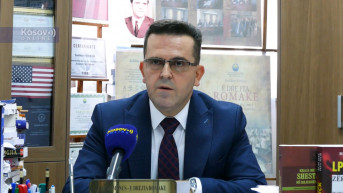
Professor at the Faculty of Law in Tetovo Bashkim Selmani believes that the protest in Skopje in support of former KLA leaders does not represent a threat, but rather shows that democracy is functioning.
Speaking to Kosovo Online, Selmani stresses that, as a professor and a person who believes in democratic values, he considers public participation, including peaceful protests, a fundamental tool through which citizens express their views and concerns.
“That is why I personally support the protest, because I see it as a healthy democratic process in which citizens seek attention for issues that are important to them. The protest is being held in Skopje for a logical reason. This is the political and institutional center, the place where the most important decisions are made. When citizens want their voice to be heard, it is natural for them to protest precisely in front of the institutions that have the power to decide, and I believe Skopje is such a city. As a professor, I believe that protests are not a threat, but an indicator that democracy is functioning. They create space for dialogue, reflection, critical thinking, values that every democratic state should care for,” Selmani says.
He goes on to say that it is not fair that former KLA leaders are still being held in prison.
“My focus is not on political gain, but on the democratic right of citizens to express what they believe is in their interest. I would also like to highlight another dimension felt by many citizens, the sense of injustice regarding the detention of former KLA members. As a professor and as a person, I advocate for the principles of equal justice. I believe that every process should be transparent, impartial and proportionate. From the perspective of many citizens, and from my own viewpoint as well, certain individuals are being unfairly held in detention. This is because, if we take into account the conflict against the Milosevic regime, they are being held in pretrial detention, while numerous crimes and suffering inflicted on civilians in Kosovo have not been fully sanctioned. For these reasons, the protest is accepted. If the system functions, meaning if we in our state want the judiciary to function, it seems that then our European allies do not have so much right to criticize our judicial system, because they do not apply the same principle to all the crimes that happened in the former Yugoslavia or in today’s sovereign states,” he says.
Selmani believes that the International Court in The Hague has not achieved its goal.
“Because if the goal had been achieved, our sovereign states would function better. I think that this unfair trial has also created unstable legal systems in our states. That is why I think that the Republic of Macedonia, as the first country bordering the Republic of Kosovo, shares a common history with it, and the two have helped each other. I also think that every protest should be supported, including other protests organized by Macedonians or Albanians or anyone who believes that the judicial system does not function or functions without equality. Only in that way can we experience and strengthen democracy, our civil rights and the future of our states in the Balkans.”
Professor Selmani also says that there is no place for politics at tomorrow’s protest in Skopje.
“Whether someone will attend or not, each person decides for themselves. Naturally, political entities or parties have a different responsibility and should consider what is in the interest of the people who are being unjustly held in The Hague. Meaning, anyone can be there. Therefore, I believe they have the right to decide according to their own assessment and interests. Here, I believe that politics has no place, given that similar protests have been held in Strasbourg, in Tirana, in Pristina and elsewhere. And once again, if the judicial system in The Hague had been correct and fair, then our states would function better, because the same crimes have been minimized and left unpunished within the legal systems of our states. That is how I see it, and regarding our future, if you check, organized crime and corruption that have become embedded in our state systems, data from the FBI show that over 71 percent of governments operate within corruption and crime, and we know that our states were not previously at that level. Meaning, corruption is organized crime, and unstable states in the Balkans, I believe, originate from those crimes. Therefore, it is in our interest for things to be as fair as possible, and procedures must be respected. Anyone who has committed a criminal offense must be held accountable, but someone who is not responsible should not be held accountable, because it is not the same to attack your neighbor and to protect your own home,” Selmani says.



0 comments