
Serbian MFA: Osmani’s statement is an attempt to divert attention from the persecution of Serbs in Kosovo and Metohija
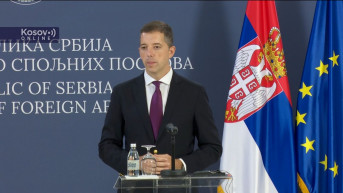
The Ministry of Foreign Affairs of Serbia stated that the announcement from the institutions in Pristina represents yet another attempt by Vjosa Osmani to divert international attention from what it described as the systematic persecution of Serbs in Kosovo and Metohija, as well as the bloodshed and ethnic cleansing that has lasted for decades, by shifting the focus to alleged “calls for war” by the President of the Republic of Serbia, Aleksandar Vucic.
“Such an approach is nothing more than an obvious attempt to conceal the failure of Pristina’s regime on the international stage, where an increasing number of states and institutions are questioning its unilateral measures — including the ban on the use of the Serbian language as part of an evident apartheid policy, attacks on Serbian municipalities, and violations of the Brussels Agreement,” the Ministry said.
It was further stated that instead of confronting her own rhetoric, which incites tensions and calls for ‘defense at any cost,’ Osmani issues unfounded accusations against others, thereby undermining efforts to build stability and reconciliation in the region.
The Ministry also emphasized that, unlike Osmani’s rhetoric, Vucic’s statements clearly warn about provocations coming from Pristina and call for dialogue, noting that such accusations from Osmani no longer have credibility within the international community.
“On the other hand, Mrs. Osmani uses militant language, comparing President Vucic to figures from the past and speaking of ‘defending peace at any cost,’ which is a euphemism for potential escalation,” the Ministry said, adding that such an approach is a classic example of war-mongering rhetoric.
“Instead of enabling a normal life for the Serbian population, it is being marginalized, leading to growing pressure from the European Union and the United States due to Pristina’s failure to normalize relations,” the statement continued.
The Ministry stressed that special focus must be placed on “the real bloodshed and persecution of Serbs,” which, as it said, the institutions in Pristina are clearly trying to conceal.
“Beginning with the case of the ‘Yellow House’ in Albania, where during and after the 1999 conflict Serbs and other non-Albanians were kidnapped amid serious allegations of organ trafficking,” the Ministry noted.
The statement recalled that the 2011 report of the Council of Europe, led by Dick Marty, points to concrete evidence of abductions and inhumane treatment, where victims — including civilians — were transported to Albania, and their organs allegedly removed for sale on the illegal market.
“The number of victims in these abductions is estimated in the hundreds, with reports of about three hundred people kidnapped after the war, including individuals from Kosovo and Metohija, Albania, and the surrounding areas. This is only part of the broader ethnic cleansing that followed,” the Ministry emphasized.
The Ministry also recalled that after the 1999 conflict, around 234,000 Serbs were displaced from Kosovo and Metohija to other parts of Serbia and Montenegro, according to a 2003 report by the U.S. Committee for Refugees, representing a mass exodus caused by violence, arson, and threats.
“This is not just a statistic — it represents thousands of families who lost their homes, lives, and future as a result of systematic persecution,” the statement reads.
It was also noted that, to this day, the rate of return remains minimal — with fewer than two percent of displaced persons having returned due to continuous attacks and discrimination.
“Mrs. Osmani clearly wishes to conceal the failure of her policies — instead of reconciliation, we are witnessing the continuation of persecution: attacks on Serbian churches, arrests of the Serb List leaders, and economic pressure forcing Serbs to leave Kosovo and Metohija,” the Ministry said.
The statement added that the international community is increasingly recognizing this propaganda.
“This statement is not a contribution to the defense of peace, but rather an attempt to provoke a new crisis and divert attention from the real victims — the Serbian people who have suffered and continue to suffer daily violence and live in fear,” the MFA noted.
Finally, the Ministry of Foreign Affairs reaffirmed that the Republic of Serbia remains firmly committed to dialogue and respect for international law, but will not allow history to repeat itself.
“We call on international actors to support a just solution based on United Nations Security Council Resolution 1244 and the principles of reconciliation,” the statement concluded.
Earlier today, the Presidency of Kosovo stated that the President of Serbia, Aleksandar Vucic, “shows the world that he has not chosen the path of reconciliation,” and that his allegedly “reckless calls for war” are a dangerous echo of the darkest chapters of recent history.


0 comments