
Simic: Pristina attempting to “erase” nearly 10,000 Serbs through the implementation of the Law on Foreigners
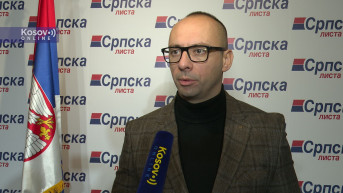
Member of the Presidency of the Serb List, Igor Simic, stated today that the announced implementation of the Law on Foreigners, scheduled to take effect on 15 March, represents an attempt by Pristina to “erase” nearly 10,000 Serbs from the territory of Kosovo and to paralyze the life of the Serb community by blocking the functioning of healthcare institutions, universities, and other educational institutions in Kosovo.
Simic told Tanjug that, according to records of the Serb List, 5,291 citizens in northern Kosovo and more than 2,200 citizens living south of the Ibar River do not possess documents issued by the institutions in Pristina because, as he stated, those institutions do not wish to enable them to obtain such documents.
He emphasized that representatives of the Serb List have, over the past several months, informed all international representatives of these figures, including those based in Pristina, as well as representatives from Brussels, Washington, and European institutions who have visited Kosovo, RTV reports.
“We are also in daily communication with our state leadership. The Director of the Office for Kosovo and Metohija, Petar Petkovic, discussed this matter with dozens of diplomats in Brussels, while Minister Marko Djuric addressed this issue in Washington. We are exerting strong political pressure, and I believe that international representatives understand what Albin Kurti intends to achieve through the implementation of this regulation,” Simic said.
He warned that if the Law on Foreigners is implemented without any amendments, it would amount to the ethnic cleansing of Serbs, adding that Kurti is attempting to expel the intellectual elite—professors, physicians, doctors, students—as well as thousands of Serbian families living in Kosovo.
“This represents tremendous pressure, 27 years after people survived ethnically motivated attacks, various terrorist attacks, and the March pogrom. Now someone is trying, through the implementation of a single regulation—something that some international representatives attempt to soften in their statements—to erase nearly 10,000 Serbs from the territory of Kosovo and Metohija and to paralyze life by blocking the functioning of healthcare institutions, universities, and other educational institutions,” Simic stressed.
Commenting on the European Union’s statement that it supports Pristina’s efforts to ensure that all persons residing in Kosovo are properly registered in accordance with Kosovo laws, Simic said that such a position does not surprise him, adding that the Serbian side must continue to engage with international representatives—both the state leadership and the Serb List on the ground.
Simic further stated that Pristina seeks to place Serbs in circumstances in which it becomes impossible for them to plan their future, adding that it is no coincidence that the sectors of education and healthcare are being targeted, where nearly 20,000 people are employed.
“Between 10,000 and 15,000 Serbs depend on that sector, and nearly 3,000 students attend the university. They spend money in municipalities in northern Kosovo and Metohija, thereby supporting the local economy. This is an attempt to drive the final nail when it comes to the presence of Serbs in that area. That is why we continue to fight, regardless of the circumstances we face,” Simic underlined.
He added that representatives of the Serb List have held 47 meetings with international representatives over the past three months and expressed his belief that they understand the nature of the problem and that there are certain ideas on how the issue could be resolved, emphasizing that the key lies in Pristina and in exerting pressure on Albin Kurti.
Simic said that, when it comes to pressure on Serbs, there is no difference whether Pristina is governed by a technical government or a fully functioning one, nor whether elections are approaching or currently underway.
He assessed the decision of European Commissioner for Enlargement Marta Kos to cancel her visit to Pristina as a clear message that, in the absence of legitimate institutions, international representatives—particularly those from the EU—are not prepared to act as mediators or to indirectly grant political legitimacy and support.
“I believe that this is a clear message that the EU will not look favorably upon what Pristina is preparing,” Simic added.
Regarding the University of Pristina with temporary seat in North Mitrovica, Simic ruled out the possibility of relocating it outside the territory of Kosovo and emphasized that the position of the state leadership and the Serb List is that there can be no integration of the healthcare and education systems into the Kosovo system, which he said is Kurti’s intention.
“Form the Association of Serb-majority Municipalities, through which the education and healthcare systems should be recognized as part of the system of the Republic of Serbia, as they are today, and within that framework find a solution through dialogue with Belgrade,” Simic said.
He recalled that in 2022, under EU auspices, an agreement was reached allowing Serbs to use personal documents issued by the authorities of the Republic of Serbia.
“The question is why they have now allowed a law from Pristina to derogate something that was agreed in Brussels,” Simic stated.
Speaking about Pristina’s argument that the Law on Foreigners is intended to regulate the registration of citizens entering Kosovo, Simic pointed out that from May to October Pristina maintains a special open lane at border crossings with Albania, through which Albanians from Tirana pass without any registration or control when entering Kosovo.
“And they are not foreigners. Yet my sister-in-law from Novi Pazar, who married my brother, gave birth to children, and works in Kosovo and Metohija, is considered a foreigner. This is what we tell EU representatives—this is a political issue that must be resolved in Brussels between Belgrade and Pristina,” Simic said.
He stressed that it is now up to the European Union, as a guarantor of a multiethnic Kosovo, to compel Pristina to respect the rights of the Serbian people equally with the rights of all other citizens living in Kosovo.


comments