
Sljuka: If there is no solution within the next ten days, the international community would support new elections
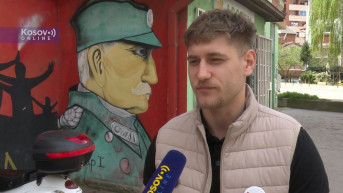
Aleksandar Sljuka, a collaborator with the non-governmental organization "New Social Initiative," tells Kosovo Online that it is not easy to determine who would benefit more from new elections. However, he adds that it seems the opposition would have a hard time repeating the results it achieved in the February 9 elections, which were better than in previous ones.
"We all believed the opposition would have the necessary majority and manage to assert itself as the force that would definitely take over power. But now, it seems even more likely that Self-Determination is closer to that. If there was trust in the opposition's ability to act more decisively, it has now been shaken, and if new elections take place, Self-Determination might achieve a slightly better result that would allow them to form a government with their existing partners and elect the president of the Assembly beforehand. Some actions they undertook during their technical mandate could position them for better results. Still, without concrete polling data, it is very hard to say where anyone stands," Sljuka stated.
He assessed that the international community would respond positively if new elections were held as a way out of the current crisis, noting that the European Union has already issued an appeal indicating that the situation should be resolved as soon as possible and that Kosovo should get a functional parliament and government.
"We also see that this is impossible unless the parties reach an agreement among themselves, and we haven't seen a willingness to compromise. Self-Determination would like the compromise to be that the opposition supports Albulena Haxhiu as president of the Assembly, while the opposition wants Self-Determination to completely change their candidate or not propose one from their party at all. If this deadlock continues over the next ten days, I believe the international community would gladly support new elections, as they would represent a restructuring – either the ruling party or the opposition would receive more votes, enabling the resolution of this stalemate," our interlocutor said.
Although elections are a realistic possibility if a government cannot be formed, Sljuka says that nothing in the Constitution explicitly allows for elections to be called solely due to a blockage in electing the Assembly president. Many experts, he notes, believe that President Vjosa Osmani could play a role if the blockage persists, by consulting the Constitutional Court, which could recommend that the president has the authority to call new elections in order to resolve the situation.



0 comments