
Sljuka: A trend to bypass Constitutional safeguards for the Serbian community
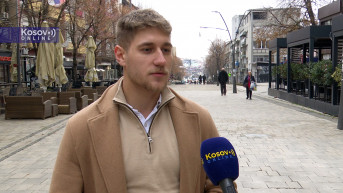
Aleksandar Sljuka, a collaborator with the NGO "New Social Initiative," told Kosovo Online that mechanisms exist in Kosovo to enable minority communities, including the Serbian community, to protect their rights and avoid being consistently outvoted by the majority community in parliament. These include a double two-thirds majority requirement for laws deemed of vital interest. However, he notes that there have been attempts in the past to circumvent some of these protective mechanisms.
He assesses that this tendency may persist in the future.
“I cannot claim for certain, but I believe there will be attempts to ensure a sufficient number of individuals representing the Serbian community who might align with the ruling majority. Through them, it may be possible to alter laws of vital interest and, potentially, even the Constitution, which would lead to the abolishment of rights guaranteed to the Serbian community. These rights prevent the tyranny of the majority, where the majority imposes all decisions on the minority,” says Sljuka.
He explains that amending the Constitution or laws of vital interest, which concern essential matters for non-majority communities, requires a double two-thirds majority in the Assembly—both from the total number of MPs and from MPs representing non-majority communities.
“This arrangement exists in the constitutions of countries that implement some form of consociational democracy or institutional frameworks allowing vulnerable minority communities to protect their rights. In Kosovo, this pertains to laws regarding municipal boundary changes, education, cultural heritage, religion, national symbols, and rights of non-majority communities that are not already defined by the Constitution,” Sljuka points out.
As an example of bypassing constitutional safeguards, he cites the appointment of Nenad Rasic as a minister.
“As someone who was not an MP, Rasic was required to obtain confirmation in parliament from MPs representing non-majority communities. This was not done because, when representatives of the Serbian List left the institutions, a political vacuum was created, enabling Prime Minister Albin Kurti to appoint Mr. Rasic in a manner inconsistent with the Constitution,” says Sljuka.
Considering that, in addition to the guaranteed ten parliamentary seats, the Serbian community in the Kosovo Assembly is entitled to a vice-president position, Sljuka says this role is more consultative.
“There are five vice-presidents in the Kosovo Assembly. Three typically come from the majority community, as they represent the three largest parliamentary groups, one vice-president is from the Serbian community, and one from other non-majority communities. The vice-president does not have decisive individual influence because the Assembly Presidency consists of the parliamentary president and five vice-presidents, six in total. The agenda of parliamentary sessions must be adopted by consensus. However, if consensus is absent, for instance, if the vice-president from the Serbian community objects, the agenda is put to a vote in a plenary session. If it is passed there, it can no longer be blocked,” Sljuka explains.
Ostale odluke Predsedništva Skupštine, bitne za njen rad, kako dodaje, donose se većinom glasova, što znači da su dovoljna četiri glasa, a pravo veta ne postoji.



comments