
Smajlovic: O'Brien isn't interested in portraying America as the world's police officer
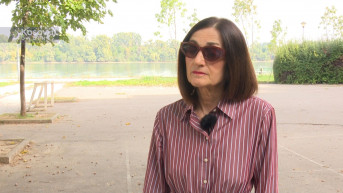
Journalist Ljiljana Smajlovic, speaking about the assumption of duty by James O'Brien as the Assistant Secretary of State for Europe and Eurasia, says for Kosovo Online that he is a knowledgeable regional expert and an experienced diplomat who doesn't need to prove himself and is not interested in portraying America as the world's police officer.
Regarding the policies he will pursue, Smajlovic emphasizes that they won't necessarily be influenced by the actions he took after Dayton or Rambouillet.
"At this moment, it is essential for us that Jim O'Brien knows the region well. He knows the key players; he is the man who, in 2000, replaced Robert Gelbard as the envoy for the Balkans. We cannot draw conclusions about his behavior here based on the fact that in 1995, he was working on the Dayton Constitution, the constitution of Bosnia and Herzegovina, with Holbrooke. He was present at Rambouillet and was an important part of Madeleine Albright's team. We cannot deduce how he will behave here because of these facts," Smajlovic says.
She points out that there were also those who were skeptical of the current US Ambassador to Serbia, Christopher Hill, due to his past.
"Think of Christopher Hill. People in Serbia who hoped that the arrival of Christopher Hill, the architect of the NATO bombing, would signify a tougher US policy toward Serbia were mistaken. The man who is here is implementing the current US policy toward Serbia, and his political baggage doesn't change that. In fact, I even think that people who were the toughest toward us during the time of Milosevic do not feel compelled to prove that they won't appease Serbs here," Smajlovic says.
As she emphasizes, O'Brien was the first American diplomat whom Serbian authorities allowed to appear in Belgrade immediately after October 5th.
"The DOS (Democratic Opposition of Serbia) government didn't want Bill Montgomery to be the first because he was the one who financed the opposition, who was the executor of direct actions. O'Brien had a completely different attitude, not at all arrogant, but sympathetic, and at that time, Jim O'Brien and the US State Department liked to present things as if they were responsible for the victory of DOS and the fall of Milosevic. O'Brien arrived in Belgrade after October 5th as the first American envoy, and in his first statement, he said, 'We didn't do this for Kosovo to gain independence.' Did he lie to us? He did not lie to us. He was speaking about what was then the American policy, and I am convinced that the American policy has always been to recognize Kosovo's independence, although they may not always openly state it. So, there are gradual steps, and we can't say for sure what the current American policy is. But judging by Christopher Hill's example, the fact that Jim O'Brien was a significant part of the hardline American stance toward Serbia, both before and after Milosevic, doesn't necessarily mean he will make one move or another," Smajlovic says.
She adds that O'Brien is considered a good diplomat and an official who will execute the official policy.
"In my opinion, it's an advantage for us that he knows people. He doesn't need to prove himself, and he won't believe everything various people tell him. We won't be able to change his attitude toward Serbia. It seems to me that, like Hill, he will have a soft approach in his interactions. He is not arrogant like some of his predecessors. When he succeeded Gelbard, it seemed like a completely new American policy just because O'Brien had a different approach. He is a polite person who doesn't point fingers at anyone and who is not interested in portraying America as the world's police officer but as a democratic state that strives to bring democracy, be fair to all players, and be an honest broker in Balkan conflicts," our interlocutor emphasizes.
She adds that one cannot conclude what O'Brien will advocate for based on his biography.
"I assume that he will continue with that kind of approach now, which doesn't necessarily mean that American policy will be soft, but it certainly means that we can't read anything from his biography and conclude what he will advocate for now. He is an important factor in the State Department and the White House's machinery for influencing these situations, and he will do it according to the current policy. He won't say, 'I had a different opinion in 1996.' He won't be influenced by the actions he took after Dayton and Rambouillet, just as he couldn't influence the decision on American recognition of Kosovo's independence. But I'm sure that even if he could, it wouldn't have been different, despite his first message in Belgrade being, 'We didn't bomb you to give independence to Kosovo,' and it turned out that they did bomb us to give independence to Kosovo," Smajlovic concludes.


0 comments