
Dimitrov: The entire region wants a European future, but the integration process has slowed down too much
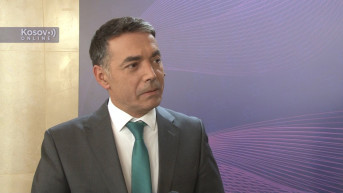
Former Minister of Foreign Affairs of North Macedonia and President of the Balkan Center for Constructive Politics "Solution", Nikola Dimitrov, stated to Kosovo Online that the European integration process of the Western Balkans would significantly speed up if the EU had clearly presented all conditions, a timeline for reforms, and the funds it was ready to invest in the region. He believes that this could contribute to elevating bilateral relations among Balkan countries to a higher level.
However, as he emphasizes, not all responsibility lies with the EU; the countries in the region should also make efforts to "clean up their own backyard" in order to jointly pursue a European future. He assesses that the entire process of European integration in the region has become "diluted" and has slowed down too much.
"What is our common vision? We agree on many issues. We also have different positions and views in the region, in the Balkans. What we agree on is that we want a European future. But somehow, this process has become diluted and has slowed down too much. I have grown old talking about European integrations. And not just me; I am the least important. Everything would be easier if, at this geopolitical moment, we received from the EU - here is the timeline, here is how much funding we are ready to invest. This is what we are asking from you. It would also be easier to resolve our bilateral disputes if we had that context," Dimitrov said, who participated in the Belgrade Security Forum.
He adds that the countries in the region should act more effectively when it comes to reforms, meeting standards, and criteria to become a more attractive market for European investors.
According to him, the accession of the Western Balkans to the EU would be mutually beneficial.
"So we share responsibility for the region with the European Union. Why is this taking so much time? We still have problems. We have our responsibility. We must boost this reform energy, the rule of law, and media freedom on our own. To become, in a way, more attractive for their money, their businesses, and their politics. So we share responsibility. But it will be much easier to solve everything if we have a realistic plan. That's what we lack. If there was ever a moment to do it, we are late, we have lost so many generations. Because this region is within the EU geographically. If we succeed, it's good for them. If we continue like this, it's bad for them," Dimitrov concluded.
When asked which of the Western Balkan countries led in terms of European integration, Dimitrov said there were two ways to answer that.
"One thing is the process, being a candidate, opening negotiations, how many chapters have been opened, how many provisionally closed... And the essence, how prepared the country is for membership today. A few years ago, the European Commission made us compare progress in the region. We are at the level of Serbia. Our overall readiness for membership is 2.0, which is moderately prepared. Montenegro is at 2.1. Albania is at 1.6. This is all based on the European Commission reports. The current Macedonian Government is obsessed with constitutional amendments and the issue with the Bulgarians and how to have the second intergovernmental conference. They are so engrossed in this that to get there, they have taken a major step back in terms of the rule of law; they have changed the criminal law, effectively ensuring impunity for officials. So, we gained a step in form but took a huge step back in essence. We will see what the numbers will be in a few days when the new European Commission report comes," Dimitrov says.
0 comments