
Starovic: Awareness has matured that Pristina is responsible for the lack of progress in the dialogue
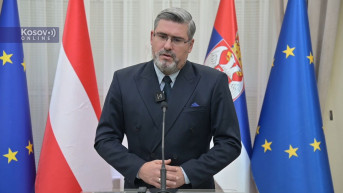
Minister for European Integration Nemanja Starovic stated that Serbia is implementing all of its obligations on the European path and recalled that Serbia has a specific suspensive mechanism in the EU accession process that no other candidate country has—the Belgrade–Pristina dialogue. He pointed out that awareness has matured among key decision-makers that the Pristina side bears responsibility for the lack of progress in the dialogue process, Euronews Serbia reports.
In an interview with Tanjug, when asked whether there is political will to resolve internal issues often cited as obstacles to opening Cluster 3, Starovic said that political will exists and that Serbia is implementing everything that constitutes its obligations or tasks in the EU integration process.
“When we speak about Chapter 35, which incorporates the Belgrade–Pristina dialogue, this represents a specific suspensive mechanism in our accession process—one that no other EU membership candidate has. However, I believe that awareness has matured among all key decision-makers that the Pristina side is responsible for the lack of progress in the dialogue process; that responsibility does not lie with the Republic of Serbia; and that we have always been a side ready and willing to engage in dialogue,” Starovic said.
He added that over the past year Belgrade has taken several important steps toward pacifying relations with Pristina, including calling on Serbs to participate in local and provincial elections, and that, as he put it, the ball is now in Pristina’s court.
Starovic expressed confidence that 2026 will be a good year for Serbia’s European integration and that the political deadlock caused by the failure to open Cluster 3 will be overcome, assessing that the best solution would be to consider admitting the entire Western Balkans region to EU membership, Euronews Serbia reports.
“On January 1, the Republic of Cyprus assumed the presidency of the Council of the European Union. Cyprus is a very friendly country toward us—dare I say a fraternal one—and I believe it will provide additional tone and impetus to overcome this formal political deadlock,” Starovic said.
He assessed that Serbia’s EU integration process is proceeding very dynamically and added that Serbia continues to do its job and communicates and cooperates with the European Commission on a daily basis.
“I believe that 2026 will be a very good year for Serbia, both in terms of our economic development and in terms of Serbia’s integration into the EU,” Starovic said.
He noted that Serbia will work hard to implement all items from the reform agenda within the set deadlines and added that this year the Government continues to implement the National Programme for the Adoption of the EU Acquis, which he said is very ambitious.
“In parallel, we are implementing our reform agenda, through which we unlock financial tranches from the EU Growth Plan for the Western Balkans. Looking beyond Cluster 3 itself, we are creating preconditions for opening Cluster 2, opening Cluster 5, and achieving the necessary interim benchmarks in Chapters 23 and 24, which is in fact essential for us to gain the opportunity to begin closing those chapters that were opened in previous years,” Starovic told Tanjug.
He added that work is also underway on programs that gradually integrate Serbia into the EU single market.
“I am referring to the full operational implementation of SEPA mechanisms. Serbia was granted access to the Single Euro Payments Area back in May last year, and by the end of the first half of this year we will have full operational implementation. Another very important process for us is Serbia’s entry into the EU roaming-free zone, which would finally abolish the very high tariffs for mobile phone and mobile internet use within the EU for our citizens,” Starovic said.
Asked when Serbia can expect the payment of the first tranches from the Growth Plan, the minister replied that during 2025 the state received pre-financing in the amount of 7 percent, or €111 million.
“Not all Western Balkan partners have, since then, received financing. Likewise, during 2025 we submitted two requests for payments—for the first and second tranches. In January this year, a request is being submitted for the third tranche, and according to the latest information we are receiving from the European Commission, procedures have been initiated for the payment of the first tranche in the amount of €68 million, which we are certainly awaiting with anticipation,” Starovic said.
Unlike some Western Balkan partners, he added, Serbia has not had any tranche suspended so far, nor has there been any reduction in the funds available to it due to potential delays.
Asked whether he believes that the absence of a Serbian representative from the most recent EU–Western Balkans summit in Brussels will negatively affect assessments of EU integration, Starovic said he does not believe there will be negative consequences of that kind.
“That was a necessary move by Serbia, given that the Council of the European Union, with the repeated absence of political consensus among all 27 member states to open Cluster 3, sent a very bad message to the citizens of Serbia,” Starovic said.
He added that such a bad political message required a serious political response.
“When we talk about that bad message—if you have five consecutive years of recommendations from the European Commission, which is the only competent authority with the apparatus and mechanisms for a substantive assessment of whether Serbia has implemented all necessary reforms to reach the opening of Cluster 3, and then, despite that renewed positive recommendation, Cluster 3 is not opened—this sends a message that, on the one hand, discourages all key drivers of reform processes in Serbia, and on the other hand gives the best possible gift to all opponents of the idea of Serbia’s integration into the EU, both domestically and internationally,” Starovic said.
The minister also assessed that an important step was taken last year toward increasing the level of alignment with European foreign policy, noting that this was recognized in the European Commission’s annual report, which identified that Serbia had increased its alignment rate from 51 percent to 63 percent.
“It is our obligation to do this gradually until the moment—until the day—we become a full member of the EU, when we will get a seat at the table where decisions are made, and from that moment we will be obliged to be 100 percent aligned. That is not possible at this time, although there are certain pronounced expectations from some member states that this should already be the case,” Starovic said.
Asked what he thinks of President Aleksandar Vucic’s proposal that the entire Western Balkans region be admitted to the EU together, Starovic said it is very reasonable, rational, and feasible.
“Although there is not that kind of political will at this moment to seriously consider and accept such a realistic and well-intentioned initiative, I believe that time will show—months or perhaps years ahead—that this is in fact the only realistically achievable solution, whether viewed from a political angle or from a technical and procedural one,” Starovic said.
Taking into account the demanding procedures of the final phase of EU enlargement, he added, it would be optimal to consider the collective admission of the entire Western Balkans region to EU membership, thereby avoiding the creation or strengthening of existing borders within the region and contributing to much-needed peace, stability, and progress.
He also assessed that, sooner or later, many will come to positions similar to those currently held by the President of Serbia.
Asked whether there will be EU enlargement by the end of the mandate of European Commission President Ursula von der Leyen, the minister replied that active debate is underway in Brussels and in key EU capitals regarding enlargement and the need to restructure the process itself.
“There is also talk of possible alternative forms of membership with fewer rights and fewer obligations, the abolition of veto rights for new members, and so on. What is undisputed is that there is political will for enlargement to occur in the coming years, but whether this will be feasible in practice, I think no one can yet say with certainty,” Starovic assessed.
Asked about his participation in the most recent meeting of the International Holocaust Remembrance Alliance (IHRA) in Israel, he said he used the opportunity to express Serbia’s concern over certain developments in the region.
“I am specifically referring to mass gatherings in the form of music concerts held in Croatia where chants characteristic of the era of the Nazi NDH can be heard. We believe that this is not and cannot be acceptable in 21st-century Europe, but I also pointed out the fact that the President of Serbia, Aleksandar Vucic, has still not been allowed by the Croatian authorities to visit the Jasenovac memorial site,” Starovic said.
He added that on that occasion he emphasized that this is not and cannot be merely a bilateral dispute between Serbia and Croatia, but rather represents a very dangerous precedent—when the head of a state is denied access to a Holocaust memorial site.

0 comments