
Starovic: Kosta’s visit is the best proof that the EU is taking its relationship with Serbia seriously
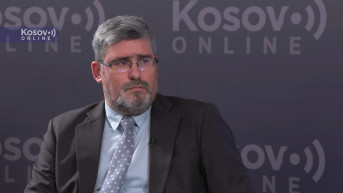
Serbian Minister for European Integration Nemanja Starovic emphasized that the visits of European Council President António Costa, Enlargement Commissioner Marta Kos, and High Representative for Security Policy Kaja Kallas are the clearest indication that the European Union is approaching regional matters—and particularly its relationship with Serbia—with seriousness, Euronews Serbia reports.
“António Costa arrives in Belgrade this evening, and a ceremonial welcome will be held tomorrow in front of the Palace of Serbia, followed by meetings with Serbian President Aleksandar Vucic and Prime Minister Djuro Macut. This visit is of special importance to us,” said Starovic, underlining the significance of this diplomatic tour, which covers multiple Western Balkan countries.
Starovic noted the key topics that will be discussed during Costa’s visit, including the acceleration of Serbia’s EU integration process and the opening of the third negotiation cluster—which, he stressed, is of critical importance for Serbia’s continued progress on its European path.
One of the core issues the EU consistently raises in its discussions with Serbia is the alignment of Serbia’s foreign policy with that of the Union.
“This is an obligation arising from the negotiating framework, and it implies a gradual alignment process, to be completed by the time we become full EU members,” Starovic explained.
He noted that Serbia’s current level of foreign policy alignment with the EU exceeds 56 percent, which is a notable improvement, but acknowledged that challenges remain—particularly concerning Serbia’s stance on sanctions against Russia.
According to him, immediate full alignment with EU policies is not feasible for Serbia, primarily due to political and economic conditions.
Costa’s visit is not limited to Serbia. As part of his regional tour, he will meet with leaders of all Western Balkan countries, including Bosnia and Herzegovina, Montenegro, Kosovo, North Macedonia, and Albania. The visit will culminate in the European Political Community Summit in Tirana, scheduled for May 15–16, where Serbia will participate as an EU candidate country.
Starovic described the European Political Community as a “relatively new format” that brings together all European countries—not only EU member states and candidates like Serbia, but also countries not seeking EU membership, such as Switzerland and Norway.
“It is a platform for dialogue, for exchanging views and ideas, and for fostering deeper ties among European countries regardless of their political status,” he explained.
He added that the summit is also expected to address the war in Ukraine and the next steps in integrating the Western Balkans into the EU.
A key topic that remains in focus is the relationship between Belgrade and Pristina, as well as the continuation of the dialogue that has long been at a standstill. While the EPC Summit is not expected to serve as a platform for resolving this issue, Starovic did not rule out the possibility that the Belgrade–Pristina relationship may be discussed.
He emphasized that, while not the summit’s primary focus, the dialogue between Belgrade and Pristina must be reinitiated.
“We recently had the opportunity to speak with Mr. Sørenesen, the new EU representative for the dialogue between Belgrade and Pristina, and he is well aware of the responsibility entrusted to him,” said Starovic.
He remarked that previous negotiations were largely detached from developments on the ground and that a new approach is needed to move beyond the stalemate.
In an interview with Euronews, Costa stated that Montenegro and Albania could complete EU accession negotiations within the next three to four years, whereas Serbia is not expected to fall within that timeframe, based on current estimates.
Starovic acknowledged that opening the third negotiating cluster would be a significant step for Serbia, but also pointed out that EU enlargement is always politically complex and subject to change.
“We are in a period when the EU must devote serious attention to its enlargement policy. Although there is talk of potential timelines for admitting new members, experience tells us to be cautious with promises,” Starovic warned, recalling previous attempts to set a membership date for Serbia that ultimately failed to materialize.
He clearly stated that the EU expects Serbia to meet specific political criteria, but emphasized that these demands are not new.
Starovic explained that the expectations concern not only Serbia’s foreign relations but also internal reforms, especially in areas like media freedom and the rule of law.
“We are in constant communication with Brussels, and we strive to meet all expectations. The first step is fulfilling our obligations toward the European Commission, such as appointing members of the REM Council,” said Starovic, adding that this is a serious political process that requires careful and responsible action.


0 comments