
Odalovic: Serbian victims do not exist for Pristina and Zagreb
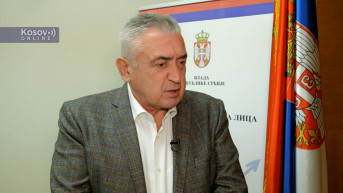
President of the Serbian Government Commission on Missing Persons Veljko Odalovic said today, on the occasion of the International Day of the Disappeared, that the region was not prepared to address the issue adequately, stressing that the remains of victims were located in Croatia and Kosovo, but that neither Zagreb nor Pristina spoke about Serbian victims.
On the occasion of the International Day of the Disappeared, the Journalists’ Association of Serbia (UNS), with the support of the International Committee of the Red Cross, organized simultaneous press conferences in several cities under the title “The Missing Will Never Be Forgotten.”
In addition to Belgrade, conferences were held today in Kraljevo and Nis, while one will be organized in Gracanica in the coming days.
The aim of the conferences is to draw attention to the situation of the families of missing persons, the need to determine the fate of those still missing, and the right of their families to truth and justice.
President of the Serbian Government Commission on Missing Persons Veljko Odalovic said that the International Day of the Disappeared provided another opportunity to remind both the domestic and international public of the issue and to review the results achieved so far, as well as the challenges that remained.
He stressed that the issue of missing persons was not only Serbia’s problem, but one affecting the entire region.
“The very figure of 9,540 people who, I believe, are currently still listed as missing shows that this is an enormous number, regardless of the results achieved so far. Those results are certainly something that should be highlighted, but not so that we can be satisfied and say that we have resolved more than 80 percent of the cases, because the remaining 20 percent carry the same weight as all the cases that have been resolved, and that is how we approach them,” he said.
Odalovic said that, in his assessment, the region was not prepared to deal adequately with the issue of missing and deceased persons.
“The remains of victims are in Croatia and in Kosovo and Metohija. The people we are searching for today, and the families sitting here, know very well where their loved ones disappeared and that they are there, in the places I am talking about. Where are the archives and the competent bodies responsible for tracing missing persons? Where are the authorities that should provide answers, prosecute crimes, and address all those matters about which neither Zagreb nor Pristina is willing to say a single word? Never in the past however many years have you heard anyone in Zagreb say that more than a thousand Serbs, in addition to the 600 recorded in the official register, went missing. Have you heard anyone in Pristina say that 570 persons of Serbian ethnicity are still listed as missing? For them, Serbian victims do not exist. And we should not be surprised by their approach to identifications or by the number that is the result of the years behind us,” Odalovic said.
President of the Coordination of Serbian Associations of Families of Missing, Murdered and Fallen Persons from the Former Yugoslavia Mirjana Miodrag Bozin stressed that the organization represented more than 60 associations of victims’ families from Serbia, Republika Srpska, and Montenegro.
“The Coordination of Serbian Associations of Families of Missing, Murdered and Fallen Persons from the Former Yugoslavia, which I represent, is an umbrella organization representing more than 60 associations of victims’ families from the Republic of Serbia, Republika Srpska, and Montenegro. For the Coordination, the issue of missing persons is not an ethnic issue, but a humanitarian and civilizational one. Resolving it is a shared debt we owe both to the past and to the future and the coexistence we wish to build with our neighbors. Even today, families continue to wait, in pain but also with hope, for the truth about what happened to their loved ones and for the opportunity to mourn them with dignity. That is why we will never abandon the search for the missing,” she stressed.
She called on the international community to exert pressure on the authorities in the region to comply with the agreements they had signed.
Bozin also pointed out that Serbia had yet to adopt a law on missing persons, noting that the Coordination had participated in the work of a working group that had completed almost 98 percent of the draft law, but that the solutions proposed by the Ministry were unacceptable to the families.
She stressed that the families were demanding that the search for missing persons continue and that new information be gathered from the archives of international missions deployed in the former Yugoslavia during the conflicts.
Deputy Commissioner at the Commissariat for Refugees and Migration Dusica Popovic said that tribute was being paid today to all missing persons from the former Yugoslavia, but above all to their families, who had been waiting for answers for decades.
“Behind every missing person there is a family, a life, and a story that has yet to reach its conclusion. That is why we have a moral and institutional obligation to persevere in the search for the truth. There are still 9,540 persons listed as missing in the region. That number obliges us to be even more determined and committed in our joint efforts. The Commissariat for Refugees and Migration of the Republic of Serbia will continue, within the scope of its competencies, to provide institutional and financial assistance to the families of missing persons and their associations,” Popovic stressed.
Speaking on behalf of the Red Cross of Serbia, Secretary-General Ljubomir Miladinovic stressed that the organization devoted particular attention to the issue of missing persons.
“From the very outbreak of the conflicts, we have stood by the families of the missing, providing them with support and assistance, and we will continue to do so for as long as there is a need. Our Tracing Service works daily with families and the competent institutions in the process of tracing missing persons, collecting information, and connecting families with all available mechanisms for determining the fate of their loved ones. The Red Cross of Serbia database contains 3,420 cases, more than a thousand of which remain active,” Miladinovic said.

0 comments