
Starovic: There is no giving up on national interests, recognition of Kosovo is not a condition for the EU
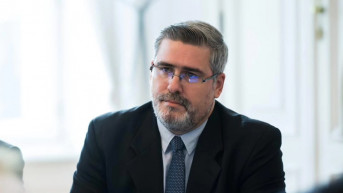
Serbia’s Minister for European Integration, Nemanja Starovic, emphasized today that the recognition of Kosovo is not a formal condition for membership in the European Union, and that nowhere does it state that mutual recognition is required, because if it were, there would be no membership at all.
Speaking on K1 TV, when asked whether Kosovo is a “stumbling block” on Serbia’s path to the EU, Starovic said that the negotiating framework defines the obligation to reach a comprehensive, legally binding normalization of relations between Belgrade and Pristina.
“Kosovo is certainly not a formal condition. What is defined in the negotiating framework is the obligation to achieve comprehensive, legally binding normalization of relations. Of course, some interpret that as an obligation for mutual recognition, but that is not what it says. If it did, there would be no EU membership, because all of us are committed to protecting our national interests,” Starovic said.
He stressed that the matter is completely clear and that, as far as the current government is concerned, whose path was set by President Aleksandar Vucic – there will be no giving up on national interests.
Starovic expressed confidence that it is possible to make progress on the European path despite this issue and added that this will become evident in the coming period.
He noted that there is a possibility, as President Vucic has also mentioned, that Serbia could become an EU member before 2030, emphasizing that it is only a possibility, since not everything depends on Belgrade, but on the consensus of EU member states.
“There is a sort of formula that no candidate country can become a member if it has unresolved territorial disputes, but we have seen in the case of Cyprus, which does not control a large part of its territory, that there are different examples. There has also been a shift in approach when it comes to some candidate countries – for Moldova and Ukraine, it was stated that the fact they do not control part of their territory does not close their European path. We must make use of those kinds of precedents and policy changes,” Starovic said.
Asked about pressure on Serbia to distance itself from Moscow, the minister acknowledged that there are such expectations regarding Serbia’s foreign policy, which, he underlined, is not politically neutral, since the two core principles of the country’s foreign policy are military neutrality and political independence.
“Our obligation is to gradually align our foreign policy with the EU’s Common Foreign and Security Policy, and I am pleased that our alignment now stands at 63 percent, which is 12 percent higher than a year ago when it was 51 percent. We have shown that we are fulfilling our obligation to gradually harmonize,” Starovic said.
He noted that some EU member states believe all candidates should now fully align their foreign policy, but pointed out that this would imply adopting all sanction packages against Russia, which Serbia has not done and will not do.
He recalled the conclusions of Serbia’s National Security Council from February 2022, which, he said, have proven correct, as they include condemnation of violations of the territorial integrity of any UN member state, including Ukraine, support for peace and assistance to affected populations, but also a refusal to impose economic sanctions on anyone.
“That has been our framework for the past three and a half years,” the minister added.
When asked about changing proximity between candidate countries and Brussels, and how Serbia’s position has evolved, Starovic noted that various countries were once “frontrunners,” but that things have changed. He reminded that North Macedonia became a candidate in 2005, before Croatia, but due to various circumstances over the past 20 years, Skopje is now near the back of the line.
The dynamics, he explained, often shift due to political circumstances.
For Serbia, the minister said, it is important to “play” by the rules of the accession process – to implement reforms, open clusters, and close chapters.
“As for whether there will be a change in the methodology that has been discussed, that remains to be seen,” Starovic added.
He recalled that in 2022, with the start of the war in Ukraine, there was a shift in the political dynamic regarding Serbia, and that it is no secret that since then, the country has not opened any new clusters.
“We received the green light, meaning the assessment that we were technically ready to open clusters 4 and 3, back in December 2021. Cluster 4 was opened at that time, but it was said that opening cluster 3 would wait until the constitutional amendment process was completed. That was finished a month later, after the constitutional referendum, but when it was time to act on that, the war in Ukraine began. Every December since, the European Commission has given the green light, but there has been no political consensus,” Starovic explained.
In the meantime, he said, Serbia has taken on another set of reform commitments, which should soon be completed, and he hopes this will help in opening a new cluster by the end of the year.
When asked whether the Berlin Process has met the expectations set 11 years ago, Starovic said one can be partially satisfied, as some processes and projects have been successfully implemented, though the ambitions were much greater.
He reminded that the idea of the Berlin Process was to enhance regional cooperation and strengthen the common regional market within the Western Balkans, thereby accelerating the region’s EU accession path through the implementation of numerous projects.
In that context, he cited the establishment of a roaming-free zone in the Western Balkans as one of the greatest achievements of the Berlin Process, along with several infrastructure projects. Among those, he mentioned the Nis–Pristina highway, adding that its implementation is currently progressing only “on this side of the administrative line.”
“There are initiatives that have been partially implemented, such as travel using ID cards, and in a way, the ‘Open Balkan’ initiative, which has been successfully implemented, is complementary to and structurally linked with the Berlin Process,” Starovic said.
He added that there is a whole range of regional initiatives, some of which have existed for 25 years, and that it is natural for them to overlap to some extent. However, it is important, he stressed, that all of them keep in mind the shared goal in the region, one that benefits citizens and moves everyone in the same direction.

0 comments