
Stiplija: "Friends of the Western Balkans" is an encouragement to expedite reforms
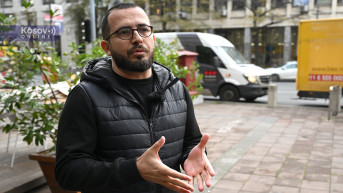
Director of the Center for Contemporary Politics and editor of the European Western Balkans portal, Nemanja Todorovic Stiplija, believes that the establishment and operation of the "Friends of the Western Balkans" group are an encouragement for countries in the region to hurry up on their path to Eurointegration, that is, to expedite implementing reforms, primarily in the rule of law sector, and preparing for participation in the common market of the Western Balkans and subsequently the European Union.
The "Friends of the Western Balkans" group was founded last summer at the initiative of Austrian Foreign Minister Alexander Schallenberg, and besides Austria, the group includes Italy, Slovenia, Croatia, the Czech Republic, Greece, and Slovakia.
They submitted a non-paper to EU member states last week, calling for increased cooperation with Western Balkan countries to strengthen and expedite the accession process. Stiplija says for Kosovo Online that Central European countries, together with Italy, are ready to support changes in the EU enlargement methodology.
"Central European countries primarily have an interest in the EU's expansion to the Western Balkans, much more than in the countries of the Eastern Partnership, as this is now the main topic of discussion in European institutions. I think this initiative is just an encouragement for Western Balkan countries to hasten on their path, to hasten with reforms, knowing that, in any case, Eastern Partnership countries cannot catch up," he adds.
Given that the group includes EU members recognizing Kosovo and two that do not – Greece and Slovakia – Stiplija notes that all countries supporting the initiative believe that all Western Balkan countries should become EU members at some point.
"There are also countries that do not recognize Kosovo, but even those countries understand that there is a parallel path for Kosovo to the EU because Kosovo has a Stabilization and Association Agreement like all other Western Balkan countries. At this moment, these countries do not recognize Kosovo, but according to the EU negotiation framework with Serbia – until the moment when Serbia becomes an EU member, or until the moment when some framework legally binding agreement between Belgrade and Pristina is reached, these countries will maintain this stance. It can mean that this stance may change in the foreseeable future, but it doesn't have to because there are countries that have a stance that they will never accept Kosovo, regardless of what Serbia does," Stiplija adds.
He emphasizes that there is no reason to view countries supporting this initiative as "friends of Serbia" or "friends of Kosovo."
"The idea is simply that all Western Balkan countries should become EU members at some point. The idea is to support them in executing reforms, primarily in the rule of law sector, which is the main topic, and, of course, preparations for participation in the common market, primarily in the common market of the Western Balkans and then the EU. So, I don't think there is room for measuring who is a greater friend to Serbia and who is a greater friend to Kosovo," Stiplija says.
Regarding whether this group has the power to influence the acceleration of the Eurointegration of Western Balkan countries, as practice has shown that France or Germany always have the final say on expansion, Stiplija notes that it is essential to bear in mind that all decisions in the EU are still made by consensus.
"Every vote, every country is equally important, and it is expected that other countries, not just France and Germany, will contribute to the debate on EU reform and the enlargement process," he said.


0 comments