
Stojanovic: Greater uncertainty about Kosovo at the Committee of Ministers of the Council of Europe
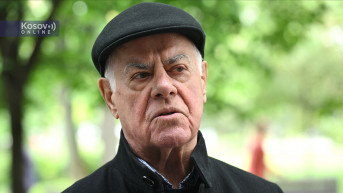
Foreign policy commentator Miroslav Stojanovic says that the possibility of delaying the decision on Kosovo's request to become a member of the Council of Europe at this month's Committee of Ministers session is "more in the media than in political discourse," and he is not sure "what lies ahead," but he is certain that the uncertainty at the Committee of Ministers is significantly greater than it was at the level of the Parliamentary Assembly where party delegations appear.
"In the Committee, it is the governments, or the states, that participate, and the balance of power there is different. The Committee could probably discuss, as scheduled on May 16, and if it is assessed that the outcome of that voting is not convincing in favor of Pristina, then there could be a shift. That would be a chance for Belgrade, if it is already late in the diplomatic offensive, because this could not have been a surprise - to make up for it and to somehow more seriously influence those countries that still do not know what to do when precedents are set. Because now many in the world, especially in Europe, are aware that one precedent creates new precedents and that it can always be counterproductive and return like a boomerang to other countries. Specifically, it now affects us, but such situations can occur in one form or another in other countries," Stojanovic said for Kosovo Online.
He emphasizes that it is problematic how the countries that explicitly do not recognize Kosovo will behave because there is "a kind of diplomatic tightrope walking and trickery which is quite duplicitous."
"To save face before their public opinion, some of these countries resort to an option that is legitimate but not always honorable, by abstaining, while trains pass because 'for' and 'against' votes are counted. This is a scenario that Greece, which says it will not recognize Kosovo but their foreign minister says they will be abstinent at this voting," Stojanovic points out.
If the Committee of Ministers' decision were postponed for some period, as our interlocutor believes, Belgrade could more assertively approach the countries that are weighing what to do, but could not change the "sealed" attitudes.
Asked whether a delay in the decision would motivate Pristina to form the Community of Serb Municipalities as soon as possible, Stojanovic says that it is possible that the Kosovo side could make some gesture regarding the CSM but that it would functionally mean nothing as the CSM is "rapidly being emptied of content."
"Nobody more than those who would shape the CSM and the international organizations and foundations that assist Kosovo in this matter mentions the Brussels Agreements, which explicitly defined what the content of the CSM would be. The CSM has been cunningly removed from the PACE because it could cause controversy and might not have been voted on as it was, and it has been returned to the realm of so-called international treaties so that it is not in the realm of human rights," states Stojanovic.
He notes that Pristina was triumphantly satisfied with what happened at the PACE because the Council of Europe is the first organization with political weight that Pristina might enter.
"Until now, they have entered organizations that are practical and technical, such as the Football Federation or the IMF and World Bank, but the first organization they are knocking on the doors of that has political weight is the Council of Europe, and they have already credited themselves with a great diplomatic success. They can now wave that fact around, even if there is a delay in the Committee of Ministers, because it is a path from which those who hold the umbrella over Kosovo will not back down," says Stojanovic.
Regarding the decision-making process in the Council of Europe, our interlocutor says that this organization began to erode its own principles long ago.
"First, no country could enter if it wasn't a state, secondly, no country could enter if not everyone voted, and then a consensus system was invented, which is not unanimity but allows someone to abstain or be sent to have a coffee, without affecting the outcome, and now they are moving to two-thirds majorities. These are always political and not legal moves," Stojanovic points out.



0 comments