
Sutanovac: Serbia is patiently building trust and working on relations with the US
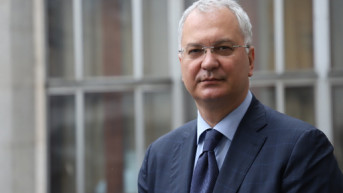
Former Minister of Defense Dragan Sutanovac says that Serbia is patiently building trust by respecting and implementing signed agreements, which is gaining positive attention, especially in Washington, Kurir reports.
The crisis in northern Kosovo and the behavior of Belgrade and Pristina have created a completely new and different environment, unimaginable to many, in which Serbia has received public recognition that it is a more constructive and better partner than Kosovo in joint efforts to achieve de-escalation of the conflict.
This security and politically challenging moment is a point at which, for the first time in many years, Belgrade's interests coincide with those of the EU and the US, and it could be an opportunity to strengthen Serbian-American relations and, in the long run, establish Serbia as the most significant partner of the US in the Western Balkans, according to Kurir's interlocutors.
Sutanovac says that Kosovo Prime Minister Albin Kurti has been faced with the choice between de-escalation or sanctions for the first time.
"On several occasions, officials of the US administration, including Secretary of State Antony Blinken, have publicly made statements aimed at improving relations between Belgrade and Washington. However, they have also, for the first time, presented Kurti with a choice: de-escalation of the conflict in the north or sanctions against Kosovo. Knowing Kurti as a very extremist politician, it can be expected that he will remain on the same course, insisting on escalation and blaming Serbs and Serbia. On the other hand, the Serbian community and the official Belgrade should do the opposite, even if it means avoiding any conflict that would put us in a disadvantageous position. The impression is that both Belgrade and Serbs in Kosovo are pursuing precisely that policy at the moment," Sutanovac evaluated.
He says that Albin Kurti has been trying to gain support for his, as he claims, extreme views towards the Serbian community in Kosovo since assuming the position of Kosovo Prime Minister.
"As the leader of the opposition party, he has used all possible extreme means to politically impose himself, while openly nurturing hostility towards both Serbs in Kosovo and Belgrade. It is now clear to everyone that Kurti and the international community do not share the same interests in Kosovo. On the other hand, for the first time in many years, Belgrade's interests have aligned with those of the EU and the US, primarily in terms of peace, stability, and rebuilding mutual trust, both in the region and in Kosovo. Finally, after several inappropriate actions taken by Kurti in the past five to six months, especially after the police harassment of Serbs in Kosovo, he has become a destabilizing factor that calls into question the attitude of Western powers towards the government of Kosovo and him personally," Sutanovac explained.
Sutanovac draws attention to the fact that there are other interested "players" who would benefit from Kosovo becoming a new conflict hotspot, in order to divert at least some attention from the Russian invasion of Ukraine.
"There is no doubt that the situation is extremely difficult and full of challenges, but if Belgrade is able to influence the calming of the situation and de-escalation, there is no doubt that our position will improve and that our relationship with the EU, and especially with the US, will be on an upward trajectory," Sutanovac says.
Nikola Perisic from the Center for Social Research says that it is clear that, when it comes to the Kosovo solution, Belgrade is currently a much more constructive partner, and that already suggests positive effects.
"This has been emphasized several times by various international representatives. This means that Serbia could improve its negotiating position compared to Pristina before the decisive rounds of dialogue. In the long run, this can positively affect the relations between Serbia and the US, which have been turbulent in recent decades, and we can establish ourselves as their most significant partner in the Western Balkans. This primarily means that Serbia would face less pressure to definitively align its foreign policy, and a more favorable view would be taken of the policy of neutrality that Serbia has chosen, and the desire not to impose sanctions on Russia. Directly related to this, the US could also influence the EU to accelerate Serbia's European integration process. In addition, the arrival of various economic entities from the US could be expected, which would have positive effects on the Serbian economy," Perisic concluded.


0 comments