
Vasic on abolishing the dinar: The system doesn't change overnight, solution should be sought in dialogue at a technical level
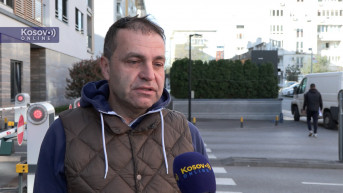
Former Secretary-General of the Association of Serbian Banks, Vladimir Vasic, regarding the issues caused by the regulation of the Central Bank of Kosovo abolishing the use of the dinar, says that the solution to the current situation should be sought through dialogue at a technical level, without entering the zone of de facto recognition of the Central Bank of Kosovo and the territory of Kosovo as an independent state.
Considering that the CBK regulation came into force on February 1 and that a transition period of three months was specified, but with a month and a half having passed without a solution for Serbs in Kosovo who receive income from the Serbian budget, Vasic says that there is never enough time for adaptation, and everything was done hastily.
"For me as an economist, banker, this all came at once. Of course, the euro has been there since 2001, 2002, when the German mark was replaced, so it's not surprising, but it's not a way to change a whole system overnight, without knowing what needs to be done, or at least without us on this side having enough information about what could be done for people to receive their money. 'It is easiest' to cut something off, but on the other hand, we see how people cannot access their money and cannot live. Time is ticking away, and we need a solution as soon as possible," Vasic says.
In this whole matter, as he says, there are two dimensions – political and human, or how to help people in Kosovo receive their earnings, whether in euros or dinars.
"We would certainly prefer them to be dinars because the territory of Kosovo is an integral part of Serbia. However, we see that people in Kosovo have problems getting dinars. A way should be found at least at a technical level for individuals to receive what they are entitled to, whether by our state depositing euros into an account and then our people withdrawing the money. For the elderly, the solution might be something like cards, for them to receive them and for the account to be linked to an account somewhere in central Serbia, although for these elderly people, the problem would probably be how to pay with cards," Vasic says.
The second dimension, he adds, relates to how the National Bank of Serbia can establish communication with the CBK at a technical level because "this is where the solution lies in how to implement this in practice."
Vasic also believes that transferring money for public enterprises and institutions receiving money from the Serbian budget will be a greater challenge than for individuals because it is questionable whether these institutions would have to register with the Kosovo Business Registration Agency.
As for whether there are legal barriers for Serbia to pay salaries, pensions, and other benefits to Serbs in Kosovo in euros, Vasic says that existing legal solutions are sufficient, but it is a question of how to implement them technically.
"There are agreements between some other countries or territories based on which we pay pensions to our people in euros, that's one model. However, here we have a specific situation because it is our territory. Whether we will treat it the same as any other, that's a question for those dealing with that topic," Vasic says.


0 comments