
Gogic: Kurti is used to sharp words and EU rhetoric not being followed by concrete consequences
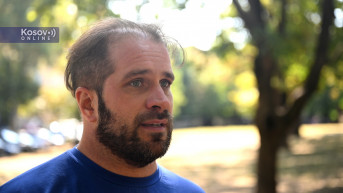
Political scientist Ognjen Gogic told Kosovo Online that Kosovo's caretaker Prime Minister Albin Kurti is used to sharp words and EU rhetoric not being followed by concrete consequences, and that the situation concerning Serb prosecutors and judges in Kosovo is unprecedented and, in general, absurd and bizarre.
Gogic recalls that even when Kosovo was under sanctions imposed by the EU over the developments in the north in 2023, their impact was not really felt.
"So, they were imposed more formally. Kurti has learned that disregarding and ignoring the EU's recommendations will not have practical consequences. That is why he can continue. The only situation when it was different was when, in connection with the laws on foreigners, he agreed to make a compromise and introduce exemptions for Serbs. There, before the final deadline, there were actually clear messages that this would lead to certain consequences in relations between him and EU member states, so he had to comply. In other situations, he actually knows that there will be no consequences," Gogic says.
Gogic says that this situation concerning judges and prosecutors has not occurred often, meaning that Brussels is actually reacting after the fact.
"When something happens, that is, when something happens, for example, the closure of Serbian institutions, and when the European Union says that this must be carried out in a different way, in coordination and agreement with the Serbian side, it is always after the fact, when the matter is actually already settled. In other words, when a fait accompli has already been created. So there have not been many such examples where it was actually said in advance that something could not be done, and he disregarded that. Perhaps the best, or closest, example is the ban on the dinar, regarding which he negotiated with Serbia. At that time, it was a process that lasted a long time. In other words, it was something that unfolded over a period during which the entry, or rather the bringing in, of cash and money from Serbia into Kosovo was prevented, followed by the closure of branches, post offices, exchange offices and other institutions," Gogic says.
He recalls that Kurti carried all this out despite the fact that, at the very beginning of the process, he was told that it should not be done.
"The Americans publicly and openly told Kurti that they were against it, but he pushed it through anyway. So that is perhaps the closest example to this. There really is no other. Everything else happened after the fact, that is, once something had already happened. In the case of the prosecutors and judges, this is an open secret. It is known that behind closed doors, an activity mediated by the European Union was actually taking place between the Serbian and Albanian sides, during which it was agreed that the judges and prosecutors would return, that is, be reintegrated. The Serbian side was expected not to prevent the judges and prosecutors from returning, that is, to encourage them to withdraw their resignations, while the Albanian side was supposed to allow them to return to their positions by not creating obstacles along the way, or rather by enabling them to withdraw their resignations. That did not happen," Gogic notes.
Our interlocutor also believes that the major question is whether those judges and prosecutors would have withdrawn their resignations at all if someone had not encouraged them to return to work, if someone had not called on them to do so, including people from Belgrade and the European Union, with a guarantee that this would be implemented.
"However, this was blocked by the Judicial and Prosecutorial Councils. This is actually a situation that works in Kurti's favor because he can use it as an excuse. He says: 'The executive branch did not decide this.' In other words, it was not the Kosovo government that prevented the return of the judges and prosecutors, even though it was opposed to it, but two bodies, the Judicial and Prosecutorial Councils, which have autonomy. They are the ones who have jurisdiction here to make that decision in the first place. So he has a clear excuse here," Gogic said.
He emphasizes that although it is known that representatives of the executive branch, specifically Albulena Haxhiu, called on these two bodies not to allow the return of the judges and prosecutors, when that happened, he nevertheless has the excuse of saying: "I did not make that decision."
"This situation is unprecedented and, in general, absurd and bizarre, because the initial consideration of those resignations, or rather the failure to consider the resignations, lasted for years. The resignations remained in a drawer for a long time and those two bodies actually considered them only after they had been withdrawn. So this is a formal legal question: were they even able to consider resignations that were no longer in effect? And this is now a question for other legal bodies, where the judges and prosecutors should turn to other courts in Kosovo – the Administrative, Supreme or Constitutional Court – and try to pursue the matter. Even the European Union and the United States called for legal avenues to be pursued so that the matter could be reviewed and their return enabled. And now the only question is whether Kurti and the executive branch will continue to obstruct this. In other words, they have a way to allow the situation to be restored to its previous state by accepting their appeals before the judicial authorities," Gogic explains.
Finally, he stresses that the major question is whether there will still be a willingness among prosecutors and judges to resort to this mechanism after all of this, and whether the executive branch will once again try to obstruct it and perhaps exert pressure on prosecutorial and judicial bodies and judicial authorities in order to prevent it.

0 comments