
Vujinovic: Current course of investigation does not confirm Belgrade’s responsibility for the Zubin Potok incident
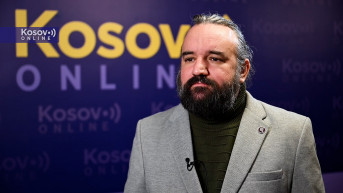
Security studies researcher Nikola Vujinovic pointed out that the current course of the investigation into the explosion in the Ibar-Lepenc canal has yielded no results, nor has it confirmed the accusations by Kosovo's Prime Minister Albin Kurti that Serbia was responsible.‚
“At this moment, we have no investigation results, and we don’t even know whether this investigation is truly ongoing. President Vucic stated that he demands answers as to why Kosovo's security forces contaminated the crime scene. On the other hand, we saw that Vjosa Osmani held some meeting with representatives of the so-called Kosovo security forces, from which we received no information. We see various analysts, ambassadors, and Albin Kurti stating that an investigation should be conducted. So, we have no results and no confirmation of the initial political accusations that Serbia did this. I would even dare to say that we might not even see an investigation or any results at all,” Vujinovic told Kosovo Online.
When asked how to interpret statements by Western diplomats in Kosovo, particularly U.S. Ambassador Jeffrey Hovenier’s remarks that the outcome of the investigation should be awaited, he responded that these statements are a message to the authorities in Pristina that they do not have their unequivocal support.
“Western allies are ready to support Kurti as long as that support is meaningful, but through their actions, they are showing that this support no longer exists,” Vujinovic emphasized.
For now, he stressed, only some basic details are known, leading only to the conclusion that the bombing of the Ibar-Lepenc canal was not an attempt to destroy critical infrastructure in Kosovo but rather a "message" or indicator of what could happen if someone truly intended to do so.
“We can see from some statements by political representatives of the so-called Kosovo institutions that they more or less have established basic facts: how much explosive was needed and what could have been the targeted consequences of this act. The canal is one of the essential components for supplying, cooling the thermal power plant, and providing water to the wider community in that part of Kosovo and Metohija. Essentially, we can assume the scale of the event and conclude that this was not perhaps an actual attempt to destroy critical infrastructure, as Kurti initially tried to portray it, but rather a message or an indicator of what could happen if certain things are not done,” Vujinovic noted.
He explained that possible motives for the explosion in the Ibar-Lepenc canal can be analyzed by questioning who benefited from such an action and who was harmed.
“My opinion is that Kurti and his Self-Determination movement benefit the most from this situation, as they are, by all accounts, fighting for some majority that would be secure in the future Kosovo parliament,” Vujinovic said.
He also bases this claim on recent unilateral actions by Pristina’s authorities in northern Kosovo and the fact that such an incident would harm the Serbian community the most.
“This harms the Serbian community the most, both politically and in terms of the people living in those villages, making it completely nonsensical to think that this was done by some Serbs,” Vujinovic concluded.

0 comments