
Vujinovic: Kosovo remains a "burning fire", escalation depends on geopolitical circumstances
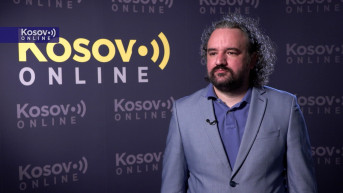
Security studies researcher Nikola Vujinovic told Kosovo Online after the concluded Summit in Washington that Kosovo remains a "burning fire" and that the security issue is not significant "only due to the behavior of the Republic of Serbia."
"If Serbia were to behave as the so-called Kosovo government of Albin Kurti does, there would indeed be enormous problems. Therefore, it remains a problem, but its escalation depends on geostrategic factors," Vujinovic believes, adding that the strengthening of NATO in the Balkans aims to discourage such a development of the situation.
According to him, NATO sees its stronghold in the region. The Western Balkans remains strategically important, and its strategic importance will only grow as Russia approaches this region.
"The latest information is that, on the margins of this summit, Romania, Bulgaria, and Greece signed certain agreements to create various logistical routes that will bring troops from the US and other NATO members into the Black Sea basin. We have a base in Albania that is developing, a base in Romania that is developing, and the strengthening of NATO naval forces in the Black Sea. The only enemy can be Russia," our interlocutor explains.
On the other hand, he notes that "support for forces that have a conditionally anti-Serbian stance" is getting stronger and stronger.
"They are getting encouragement, if nothing else - by silence. The military is being strengthened in Kosovo and Metohija, Turkey is strengthening the Bosnian military, etc. We have practical steps that indicate that NATO considers this its stronghold. So, the right flank in a potential conflict with Russia is being strengthened. And not only with Russia but also with the Middle East, Iran, etc.," says Vujinovic.
He reminds us that the "Belt and Road" passes through the region, that China has bought the port of Piraeus, and that it aims to make Serbia some sort of stronghold in this part of the world.
"It seems to me that this conflict between China and the US through NATO will become sharper and will only intensify if Donald Trump becomes president," he assesses.
Through the Declaration from the summit and the new 40 billion euros of aid to Ukraine, a unified stance can be seen, but he adds that the message about Ukraine's irreversible path to NATO is a "stake through the heart of peace."
"Russia says the first condition for peace is that Ukraine does not join NATO. Therefore, the message to Russia is clear that there will be no peace, and we immediately saw the reaction of Dmitry Medvedev from the Russian National Security Council, who said that this means the war will end in two ways: either there is no Ukraine or there is no NATO. Or neither," Vujinovic says.
On the other hand, there are also individual statements, primarily from Slovak Prime Minister Fico, who said they would never support Ukraine's path to NATO, which, our interlocutor notes, is paradoxical with what was said in the declaration.
"And we also have Orban's behavior, who came to the NATO summit only to go to Florida to see Donald Trump. These are some fascinating things that speak about unity in the organization. Nominally, we can say that this unity is strengthened by the stance of all together, but we see that individual positions are very different," he assesses.
According to him, the surprise at the summit was the emphasis on China, which he says is hypocritical, "because if the Western world helps Ukraine, why can't someone else help Russia?"
"The fact is that in the previous period, we had visits from Blinken from the US, Scholz from Germany, and even French representatives who went to China to negotiate future cooperation. And then you come to a summit and say, 'You are the main obstacle to peace.' In my opinion, with this declaration, China has been marked as the one responsible for the lack of peace, which is paradoxical and absurd," Vujinovic explains.
The summit was also, he adds, an "attempt to revitalize Biden," which he assesses did not succeed.
The message about Ukraine's membership in NATO is, he emphasizes, a "fig leaf for Ukraine, so Ukraine does not give up its fight with Russia," but neither Moldova nor some other countries received any positive signals.
"I think that further expansion was not a priority of the discussions, and I am not sure since NATO, like the EU, has that enlargement fatigue. Old members are not overly happy about receiving new states because they are not admitting Norway, for example, which is a developed and capable state, but rather would be admitting some states that have problems, such as Ukraine or even Moldova or Georgia," Vujinovic notes.
He concludes that the North Atlantic Alliance is increasingly becoming a global organization and that AUKUS—a pact in the Indo-Pacific between Australia, Japan, the US, and the UK—should be a "proxy for NATO."

comments