
Vukadinovic: Pristina is trying to copy the Srebrenica Resolution, but their chances are slim

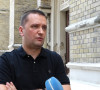
Kosovo authorities will try to replicate what the Bosniaks did with the story of Srebrenica, but the chances of them succeeding are much smaller, Igor Vukadinovic, a research associate at the Institute of Balkan Studies, assesses for Kosovo Online.
Speaking about the announced cooperation between the Institute for War Crimes in Pristina and the Potocari Memorial Center in Srebrenica, he says it is not a surprise.
"The connection between Kosovo authorities, Pristina, Sarajevo, and the Bosniak political elite has existed for quite some time. This is a cooperation that was established back in socialist Yugoslavia – connecting republics in pursuit of common interests, often against Serbia and Serbian interests. In this sense, Albin Kurti is quite sympathetic to Bosniak interests," Vukadinovic says.
As for the Bosniak political elite, he believes they would have recognized Kosovo long ago if it were not for Republika Srpska, which prevents formal recognition within joint institutions.
"On the other hand, the Kosovo authorities certainly admire the way the Bosniaks politically profit and exploit the topic of history, the topic of war crimes during the war, and, in a way, the dehumanization of Serbs that is carried out through the mantra of Srebrenica, which has been ongoing for years and has been accepted by the West. The Kosovo authorities are nowhere near as successful as the Bosniaks from Sarajevo in exploiting the topic of war crimes to gain concrete political benefits," Vukadinovic believes.
He thinks that the Albanian authorities in Kosovo will try to do something similar in the coming period.
"They will try to create a copy of what the Bosniaks did with the story of Srebrenica, but the chances for that are much smaller, considering that they entered this story and started this project of mythologizing a certain war crime too late, to make it a symbol of the entire war and thus gain new political points," the historian says.
He explains that in the case of Bosnia and Herzegovina, it was started immediately after the war.
"The demonization and dehumanization of the Serbian leadership in Bosnia and Herzegovina, coupled with prosecution based on double standards – Serbs constitute over 90 percent of political prisoners both in Bosnia and Herzegovina and in The Hague, while crimes against Serbs are generally not prosecuted. Something similar is happening in Kosovo, except that the Kosovo side has achieved some of its national interests without much need to follow it up with a narrative, a specific crime," Vukadinovic notes.
He reminds that one of the most well-known cases in Kosovo is "Racak," but that "it shows more of a setup than a genuine war crime."
"It is more of an excuse and alibi for the start of the bombing rather than a real mass crime against civilians, so in that sense, the Albanian authorities in Kosovo are trying, with significant delay, to approach the topic of war in the same way the Bosniak elites did. Their motives are similar, but the circumstances are quite different. Therefore, I do not expect them to have much success in this regard," he concludes.

0 comments