
Vuletic: Brussels aware of Pristina's strategy – putting Kosovo Serbs before a fait accompli
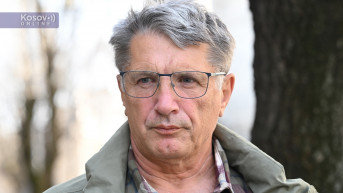
Brussels, as the main negotiator, is aware of the difficulties in the dialogue but also of Pristina's strategy to bring the Serbs in Kosovo to a fait accompli, Vladimir Vuletic, an adjunct professor at the Faculty of Philosophy in Belgrade and a sociologist, assesses for Kosovo Online.
"After the unilateral moves by Pristina, negotiations have become more difficult. All participants in the talks are aware of this. Just as everyone is aware negotiations are necessary. Or, Pristina may think they are not necessary if they succeed in what they undoubtedly intend, which is to put the Serbs living in Kosovo and Metohija in front of a fait accompli that implies 'either bow down or be removed.' Then, only technical issues remain for them. However, this is something that the European Union is aware of and could cause various problems. Everyone is aware that such solutions do not solve the problem but only bury the embers and the smoldering fire," Vuletic says.
Commenting on the stalemates in the negotiations, as well as the claim by the EU Special Representative for the Kosovo-Serbia Dialogue, Miroslav Lajcak, that "many political questions remain unanswered," Vuletic says that some of them are unilateral moves by Pristina, especially the abolition of the dinar.
He emphasizes that from Pristina's perspective, it seems logical that if Kosovo is effectively already independent, then they already have all the prerogatives of a state, and it's a technical matter of how to implement and use a single currency.
"Pristina sees those things that way. For Brussels, as a mediator and negotiator, it is clear that there are certain political issues because, on the other side, there is Belgrade, which sees all of this quite differently or oppositely. Therefore, political issues must be resolved to reach an agreement. For Pristina, it is now only a matter of a technical level. To be honest, for Belgrade, it is also only a matter on a technical level of how to solve some problems within the framework of what Serbia is, but Brussels sees it as an attempt to reach a political agreement on what the Ohrid Agreement implies," Vuletic points out.
He highlights that the key political issue on which Belgrade and Pristina need to agree is the final solution.
"That is actually the key political issue, and all others stem from it. But the difference between political and technical issues is that technical issues are something that needs to regulate decisions that have already been made, which everyone has agreed upon. However, it is clear that such decisions have not yet been made," Vuletic emphasizes.
Asked how official Belgrade could continue negotiations after a series of unilateral moves by Pristina, Vuletic says it is a "very tricky position" because he understands that only through economic development can they fight for Kosovo and for the rights of Serbs.
"Belgrade is in a very independent position. For specific reasons. Pristina, primarily Kurti, sees the whole thing as only, exclusively a question of Kosovo's independence. All other issues related to Kosovo's economic development, and its political position, which, they are aware, cannot be significantly worsened. All those issues are secondary to them. Belgrade, on the other hand, must take into account a multitude of other things related primarily to Serbia's economic development because it is clear that without an economically strong Serbia, you cannot fight for Kosovo or for the rights of Serbs in the region in general. That is equally important for Belgrade, if not more important, to achieve economic stability and progress because that is a prerequisite. We have no other sources for political struggle than what we create ourselves," Vuletic emphasizes.
He assesses that economic issues are not of fundamental importance for the Pristina authorities and Albin Kurti, while Belgrade is additionally faced with a geostrategic situation.
"On the other hand, Kosovo, namely Kurti, has a completely different kind of sources, so that economic issue is not essentially important to him, and that is his advantage. Belgrade has limitations because it must also take into account the geostrategic situation. The fact that Russia is not only in conflict but is an enemy of the EU, that China is an unwelcome guest here. Some of our natural allies who advocate for respecting UN principles and Resolution 1244 are effectively excluded from this process, and we are actually fighting alone, which is by no means easy," Vuletic concludes.
0 comments