
Vuletic: Kurti wants to set the region on fire
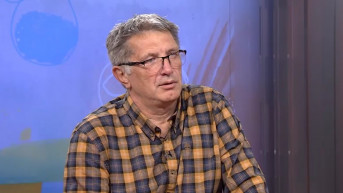
Sociologist Vladimir Vuletic assessed that the Prime Minister of Kosovo, Albin Kurti, was very impatient, if possible, to set the region on fire, to disavow Resolution 1244, which, he said, was possible if a new conflict were to arise, RTV reports.
"Kurti uses every opportunity and in every place to increase tensions, to provoke conflict," Vuletic told Tanjug.
When asked how he would comment on Kurti’s visit to Tetovo, he said that in such turbulent times, there was a serious danger of starting a small fire that could easily cover the entire region, precisely because some issues had not been resolved.
"What Kurti is counting on is that NATO would be involved in the conflict, this is a strategy and a ploy," the sociologist said and added that there was no doubt that NATO and the majority of Western countries that had recognized Kosovo would be the ones who would protect Kosovo's security.
As he emphasized, Kurti was trying to involve the region in all that, if possible.
When asked to comment on Kurti's statement that North Macedonia should be closer to Kosovo, Albania, and Bulgaria, and as far as possible from the President of Serbia, Aleksandar Vucic, he said that local leaders in these turbulent times, when even the UN was no longer what it had been, when the UN Security Council didn't have the power it once had had, they were trying to work out the kind of arrangement that suited them in the long run.
"It's not just about Tetovo, but Greater Albanian aspirations are much broader and include not only parts of Albania and Kosovo, but also parts of Greece and Serbia," Vuletic said and emphasized that there were several unresolved issues in the region - Albanian, but also Serbian national question.
Kurti, says Vuletic, has no allies in Albania at the moment.
"Edi Rama is still European-oriented, but all the more Kurti is counting on the fact that he could gain the support of the Albanians in Albania and establish himself as the all-Albanian leader," he said.
When asked how honest Pristina's narratives about the normalization of relations were, Vuletic said that for them this normalization meant the recognition of Kosovo.
"In that sense, they are sincere," the sociologist emphasized.
According to him, everything that is happening is an attempt to put pressure on the West, to put pressure on Belgrade, because if that doesn't happen, the Albanian issue will spread to North Macedonia, which is an extremely vulnerable country.
Vuletic reminded of the events in Kumanovo, that despite the fact that there was a solution, where relations between Macedonians and Albanians had been put into politically correct relations, very little was needed to disrupt stability.
Commenting on the letter, which a little more than 50 members of the European Parliament sent to the officials of the USA, EU, and Great Britain, asking for a stricter attitude towards President Vucic, the sociologist says that the attitude of the parliamentarians, among other things, should be seen as a pressure to change the current policy that perceives Belgrade as an important actor and factor of stability in the Balkans.
"To put pressure on Belgrade and Serbia to reduce Serbia to the smallest possible extent, to recognize Kosovo and Metohija, to turn its back on Republika Srpska and Dodik, to stop interfering and supporting and helping the Serbs in the region," Vuletic said and added that it wouldn't end there.



0 comments