
Weltwoche: Washington is changing the rules of the game in the Balkans – Serbia is becoming a partner, while Kosovo is being asked to protect minorities
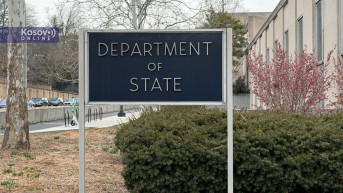
The first strategic dialogue between the United States and Serbia represents an extraordinary shift in U.S. policy toward the Western Balkans over the past several decades. However, even more significant than the dialogue itself is what is happening—or, more precisely, what is not happening—in relations between Washington and Pristina, the Swiss weekly Weltwoche writes.
For years, U.S. policy toward the Western Balkans rested on an almost unchanged assumption: Kosovo was regarded as Washington's closest partner in the region, while relations with Serbia remained burdened by the legacy of the 1990s, differing foreign policy priorities, and the unresolved status of Kosovo. However, developments in July 2026 demonstrate that this approach is changing, according to the article published by Weltwoche.
The article recalls that the first strategic dialogue between the United States and the Republic of Serbia was held in Washington on July 17. The talks, led by U.S. Secretary of State Marco Rubio and Serbian Foreign Minister Marko Đurić, opened a new chapter in bilateral relations.
"The U.S. Department of State described the strategic dialogue as 'a new era' in relations between the two countries and as confirmation of their shared commitment to deepening the partnership. The outcomes of the talks were not merely symbolic. The most significant tangible progress was achieved in the field of energy. The United States and Serbia agreed to strengthen energy infrastructure and regional energy security, with the reversible pumped-storage hydropower project 'Djerdap 3' identified as one of the key areas of future cooperation. This represents not only a major investment in the modernization of Serbia's energy system but also an important step toward greater energy independence for Serbia and the diversification of energy sources in the region," the article states.
It further notes that Serbia acceded to the Artemis Accords, the U.S.-led initiative bringing together countries interested in cooperation in the peaceful exploration of space, science, and advanced technologies.
"This step forms part of a broader process of integrating Serbia into international cooperation networks in the fields of future technologies and innovation. For a country that, only a quarter of a century ago, was subjected to U.S. military intervention, such an institutionalized partnership represents a historic turning point," Weltwoche writes.
At the same time, the article adds, another process has been unfolding—one that has gone almost unnoticed in the European media—the complete stagnation of the strategic dialogue between the United States and Kosovo.
"As early as September 2025, the U.S. Embassy in Pristina announced the suspension of the strategic dialogue with Kosovo. U.S. officials have repeatedly emphasized that the resumption of the strategic dialogue depends on Pristina's willingness to implement the obligations it undertook within the framework of the dialogue with Belgrade, including those relating to the Serbian minority. During the strategic dialogue in Washington, the Serbian delegation explicitly raised the issue of the position of Serbs in Kosovo and Metohija, including the security of the Serbian Orthodox Church and the Visoki Decani Monastery," the article states, noting that issues of religious freedom and the protection of Serbian cultural heritage have gained significant prominence in U.S. public discourse in recent months.
The Swiss weekly further notes that particular attention was drawn to remarks made by Pastor Mark Burns, a close adviser to President Donald Trump, who publicly criticized restrictions imposed on representatives of the Serbian Orthodox Church in Kosovo.
"Burns specifically pointed to the requirement that the Patriarch notify the authorities in advance before visiting certain monasteries, arguing that such a practice is incompatible with the principles of religious freedom. His remarks attracted considerable attention because they formed part of a broader debate that has been taking place in the United States in recent months regarding the status of Christian communities around the world. For Washington, the protection of the Serbian community in Kosovo is no longer merely part of the technical dialogue between Belgrade and Pristina. It is increasingly viewed as an issue of religious freedom, the protection of cultural heritage, and the safeguarding of minority rights," the article points out.
The shift in the U.S. approach, it continues, cannot be explained solely by regional developments.
"In an increasingly unstable international environment, Washington is attaching greater importance to reliable and predictable partners. Serbia is the largest economy in the Western Balkans, a key infrastructure and energy hub, and a country with significant technological and industrial potential. For precisely these reasons, the first strategic dialogue with Serbia represents more than a diplomatic event—it demonstrates that Belgrade has become a partner with whom the United States seeks to discuss issues that extend far beyond Kosovo, ranging from energy and emerging technologies to investment and regional stability. The greatest change is not that America has launched a strategic dialogue with Serbia. The essence of the shift is that, for the first time in many years, Serbia has become a partner with whom Washington discusses the future of the region, while Kosovo has simultaneously been clearly informed that political support is no longer unconditional. For the first time in more than two decades, Serbia is no longer merely the habitual culprit in U.S. Balkan policy, but a serious negotiating partner. That is the true significance of the strategic dialogue launched in Washington," the article published by Weltwoche concludes.


0 comments