
Gogic: The Condition for the resumption of the U.S.-Kosovo dialogue is not the Serbian community, but Washington's energy interests
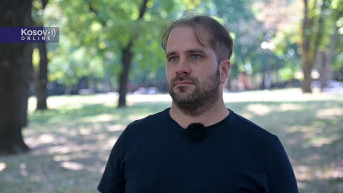
Political scientist Ognjen Gogic has stated that the United States may invoke the issue of the Serbian community as a moral precondition for resuming the strategic dialogue with Kosovo, but that the underlying motives are Washington's economic and pragmatic interests, including the issue of connecting Kosovo to regional gas infrastructure via North Macedonia.
Gogic points out that it is not entirely clear which specific obligations toward the Serbian community the U.S. Department of State referred to in its statement. He recalls that last year's decision to suspend the strategic dialogue was preceded by the crisis surrounding the constitution of the Kosovo Assembly and the appointment of a deputy speaker representing the Serbian community.
According to Gogic, the matter was ultimately referred to the Constitutional Court, which ruled that the Presidency of the Assembly of Kosovo must include a deputy speaker from the Serbian community and that the candidate for that position must be nominated by the majority of Serbian MPs. As the Self-Determination Movement (Vetëvendosje) accepted this arrangement, the issue was resolved.
"This raises the question of what exactly the Americans have in mind when they say that obligations toward the Serbian community must be fulfilled," Gogic told Kosovo Online.
However, he believes that the continuation of Kosovo's institutional crisis is one of the key reasons why Washington is currently not considering the resumption of the strategic dialogue.
"Since September last year, Kosovo has remained mired in an institutional crisis. During that period, two rounds of parliamentary elections have been held. Objectively speaking, it has not even been possible to assess whether the government has been fulfilling its obligations toward the Serbian community because, in reality, there has been no fully legitimate and functioning government," Gogic said.
In his view, the U.S. decision not to resume the strategic dialogue is inseparable from Kosovo's ongoing political crisis, since, as he noted, Washington cannot seriously consider cooperation with institutions that are not fully functional.
Nevertheless, Gogic argues that the issue of the Serbian community may not be the only—or even the primary—reason behind the U.S. decision.
"It should also be borne in mind that the current U.S. administration is highly pragmatic and is often described as transactional in international relations. Therefore, it is highly questionable whether the real reason is its policy toward the Serbian community, because, in the meantime, the issue of natural gas has emerged in bilateral relations between the United States and Kosovo," Gogic noted.
As he explained, the United States wants Kosovo to be connected to regional gas infrastructure through North Macedonia, a proposal that the current authorities in Kosovo have rejected.
"So the question is whether the real issue is the Serbian community or whether other, more economic and pragmatic considerations are actually at play. The United States then invokes the Serbian community, presenting the decision as a moral one guided by values," Gogic said.
He believes that, had the Kosovo government accepted the proposal to connect to the gas pipeline via North Macedonia, it is highly unlikely that the United States would have refused to resume the strategic dialogue, considering that energy and infrastructure would have been among the key topics of discussion.
"In reality, there is a whole range of factors that have led to the suspension of the dialogue until further notice, and politically the most effective justification is to invoke the Serbian community. In practice, however, we do not see the United States intervening on behalf of the Serbian community in Kosovo. Instead, it is taking measures primarily to protect its own interests," Gogic assessed.
Speaking about the possible continuation of the institutional crisis, Gogic said that the current situation suits caretaker Prime Minister Albin Kurti because it enables him to continue implementing certain policies while simultaneously avoiding issues that require major political decisions, such as the establishment of the Association of Serb-Majority Municipalities.
"As long as the institutional crisis continues, Kurti remains prime minister, albeit in a caretaker capacity. It makes little difference to him whether he serves with a full mandate or in a caretaker role, because practice has shown that he can implement the policies he wants even as caretaker prime minister, while at the same time having an excuse not to engage in more sensitive issues, such as obligations toward the Serbian community, including the Association of Serb-Majority Municipalities or the self-governance mechanism for the Serbian community envisaged under the Brussels and Ohrid Agreements," Gogic said.
In his assessment, there is therefore a possibility that Kurti will seek to prolong the institutional crisis, as such a situation allows him to avoid both the issue of establishing the Association of Serb-Majority Municipalities and the question of connecting Kosovo to the gas pipeline through North Macedonia.



0 comments