
Ymeri: Eviction of Serbian institutions from the building in Bosniak Mahala would deepen tensions in the north

According to Kosovo analysts, the decision to remove Serbian institutions from the building in Northern Mitrovica's Bosniak Mahala would further deepen tensions in the north and could be interpreted as an attempt to avoid fulfilling obligations Kosovo accepted within the dialogue with Serbia, as reported by Albanian Post.
According to Visar Ymeri, the executive director of the Institute for Social Policy "Musine Kokalari", the implementation of this decision means "further distancing" from the possibility of reaching and implementing agreements.
This decision, which was supposed to be implemented on August 25 but was postponed for two weeks, has been opposed by the United States and the European Union, which unanimously deemed it an action that does not contribute to de-escalation in the north.
Therefore, even Ymeri, considering the remarks of Kosovo's allies, acknowledges that any decision that was uncoordinated with Western countries and that caused tensions has "cost Kosovo dearly".
"We were put under sanctions, the decision was not implemented, while the northern part of the country moved further away from becoming an integral part of the territory and a cohesive part of society within institutional functionality," Ymeri emphasized for Albanian Post.
The initiative of the Municipality of Northern Mitrovica, led by Erden Atiq and supported by the central level, is, in the view of a political analyst, in light of the actions taken by the government of Albin Kurti in the north.
By saying this, Ymeri refers to the decision about license plates, "which remained unenforced," and there was even a boycott of institutions by citizens of Serbia, who are the majority in that area, and then there was the decision to install Albanian mayors in the offices of municipal buildings, which triggered the biggest crisis and where Kosovo became responsible for the entire situation.
For the former associate of Prime Minister Kurti, all those actions brought "only harm" to Kosovo.
When asked if with these decisions Prime Minister Albin Kurti is trying to "avoid" the commitments he took on, first in Brussels and then in Ohrid, Ymeri emphasizes that such actions further distance Kosovo from concluding the dialogue with Serbia.
In doing so, he underscores that "Kosovo loses a lot, both on the international stage and in domestic political movements."
For Dritero Arifi, a professor of political science, the decision to remove Serbian institutions from municipal buildings is correct, but he believes it comes at the "wrong time."
As he says, if they want to have elections in the north with the participation of the Serbian community, then this decision should be made after a solution is reached.
According to the professor's assessment, such a decision carries significant weight in the agreement between Kosovo and Serbia, so he thinks it should be done in "very close" coordination with international partners.
"By creating new problems, we cannot deal with the issue of normalizing relations. At least we have to finish the domestic task," he said.
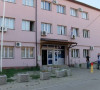
The deadline for removing Serbian institutions from the building in Bosniak Mahala in Northern Mitrovica, initially set for August 25, was postponed for two weeks.
The decision's implementation was delayed by two weeks, two days after the United States and one day after the European Union openly opposed it.


0 comments